Image

Displaying 1 - 10 of 357
This article examines how child protection workers in Chile interpret and respond to violence from children in residential care, finding that such violence is often normalized and attributed primarily to children’s trauma rather than to systemic or organizational factors. It highlights how this framing obscures the role of structural issues—such as inadequate training and staffing—and calls for more comprehensive prevention strategies that address both individual and institutional conditions.
This article highlights the severe impact of the June 2026 earthquakes in Venezuela, where powerful back-to-back tremors have left millions of children exposed to heightened risks.
This study finds that adolescents in residential care in Chile report lower levels of subjective well-being than their peers in the general population, with notable gender differences in how well-being is experienced. The findings highlight the need for more targeted policies and interventions that address both emotional and cognitive aspects of well-being for young people in care.
The UNICEF Caring for the Caregiver package is a counselling approach and behaviour change intervention that can be integrated into routine home-visiting by frontline workers, in a demand-responsive way, at a population level. This study aimed to evaluate caregiver outcomes and explore intervention experiences from the package in six low-income and middle-income countries.
This webinar, held March 27, 2026 by the Care Leaders Council, provided an international exchange among people with lived experience in care, aimed at analyzing regulatory progress, best
This article reports on Swedish adults who were adopted from Colombia decades ago and are now searching for their birth mothers after discovering that many international adoptions — involving around 60,000 children including nearly 5,700 from Colombia — were marred by irregularities such as false documentation, coerced consent, and children declared orphans when they were not, leaving adoptees without accurate identity information and grappling with psychological impacts of lost heritage.
This paper introduces an Advocacy Reach Calculator developed by ChildFund International to estimate how many children and families benefit from child protection policy changes. It outlines the tool’s development and pilot testing in four countries, showing how it can support better monitoring, planning, and advocacy efforts.
Este rápido análisis regional ofrece una visión estratégica general del Recursos Humanos dedicados a la protección de niños, niñas y adolescentes (NNA) en Bolivia, Colombia, Ecuador y Perú. Se llevó a cabo en respuesta a la falta de datos claros para la planificación y el desarrollo del personal.
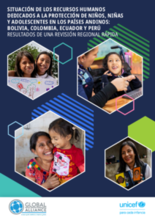
This rapid regional analysis provides a strategic overview of the child protection workforce in Bolivia, Colombia, Ecuador and Peru. The analysis examines each country’s current workforce composition and capacity, the institutional systems and practices in place to plan for, train, and support these staff, and opportunities for targeted investment and innovative practice.
This qualitative study analyzes institutional narratives between 2002 and 2024 to understand how violence and child abuse have persisted in residential care centers in Chile, drawing on interviews and public statements from child protection authorities. The findings identify systemic deficiencies, structural problems, negligent practices, concealment, and sexual exploitation networks as key factors perpetuating abuse, underscoring the urgent need for comprehensive reforms, stronger oversight, and enhanced ethical and professional standards to safeguard the rights and well-being of children under state care.