Displaying 1 - 10 of 144
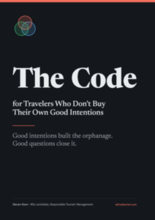
This guide is designed to help travelers assess whether their trips are genuinely ethical rather than relying on good intentions or marketing claims. It specifically focuses on orphanage tourism.
This commentary critiques Western-led global orphan care interventions, arguing that donor-driven aid, institutionalization, and voluntourism often perpetuate trauma, family separation, and an “orphan economy” despite good intentions. Drawing on lived experience, research, and ethical reflection, it calls for trauma-informed, family-preserving, and culturally respectful approaches that prioritize children’s rights, dignity, and long-term wellbeing.
This webinar presented findings from a 2025 Media Landscape Analysis by Pinkston and Barna’s 2025 survey of U.S. Christians, highlighting a significant shift in Christian media narratives away from orphanages and toward family-based care, alongside rising awareness that poverty—not orphanhood—drives most placements.
This report reveals significant issues with child victims of trafficking and unaccompanied children going missing from care. Trafficked children continue to be one of the groups who are most at risk of going missing in the UK with nearly 2 in 5 going missing in 2024.

This study explores the experiences of nine young Thai adults who grew up in a Christian orphanage supported by foreign volunteer tourists, highlighting the impact of these visits on the children. Findings reveal that while orphanages often used children to attract financial support, most volunteers provided fleeting attention, leaving children disappointed and vulnerable, emphasizing the need for orphanage models that prioritize the children’s needs over tourist interests.
This article examines the increasing phenomenon of orphanage trafficking in Nepal – a practice involving the coercive separation of children from their families and placement into unauthorized care facilities under false pretences, often for financial exploitation. It evaluates relevant constitutional provisions, national child protection and anti-trafficking legislation, and international obligations to assess Nepal’s compliance with its legal responsibilities.
Positioned as ethical travel, orphanage tourism commodifies vulnerable children, akin to slum and wildlife voluntourism. Rather than alleviating harm, it sustains institutionalisation and exploits children for profit. This article examines orphanage tourism through hospitality ethics, sustainable tourism and corporate social responsibility (CSR), revealing gaps in hospitality curricula that overlook the industry’s complicity.
This publication provides an overview of orphanage trafficking and examines how OSCE participating States can contribute towards global efforts to combat orphanage trafficking and orphanage voluntourism.
Dieser Beitrag beschäftigt sich mit theologischen und historischen Hintergründen christlichen Engagements für Waisen speziell im deutschen Kontext und stellt wichtige Forschungsergebnisse der letzten Jahrzehnte zum Kindeswohl in Waisenheimen dar. Dabei werden auch gewohnten Denkmuster hinterfragt und Alternativen aufgezeigt, die im besten Interesse der Kinder sind.
This article, by Markus Köker, examines the theological, historical, and practical dimensions of Christian involvement in orphanages, particularly focusing on institutions in the Global South and the support they receive from the Global North. Köker traces how good intentions, religious motivations, and volunteer tourism have sustained orphanage systems that often harm children’s development and perpetuate family separation.