Enhancing child protection and care reform in Moldova through EU accession

Hope and Homes for Children

A round table in Brussels, co-hosted by Hope and Homes for Children and European Parliament Vice President Victor Negrescu, explored child protection and care reform in Moldova within the context of EU accession. The report highlights progress made, ongoing challenges, and shared commitments to ensuring every child in Moldova grows up in a safe and caring family.

File

Kinship Care Mediation

Hannah Lawrence, Mia Johnson, Elizabeth Raws, et al.

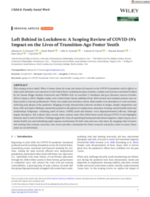
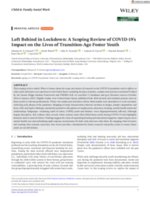
Many children in kinship care face trauma, poverty, and strained family relationships, yet their carers often lack adequate support. This feasibility study of Family Solutions’ mediation and positive parenting intervention in South Hampshire, U.K. highlights promising approaches to strengthen communication, reduce conflict, and improve outcomes for kinship families.

File

Towards a More Sustainable Future: Addressing Young Children and the Changing Climate—Promising Examples from Around the World

Joan Lombardi and Lauren Simmons

This working paper by Joan Lombardi, senior advisor to the Collaborative on Global Children's Issues, and Lauren Simmons provides a brief overview of the risks and potential of early childhood and the changing climate and showcases a dozen innovative approaches where early childhood and climate sectors have successfully converged.

File

Syria's Stolen Children

Lighthouse Reports

A new investigation by Lighthouse Reports, with a coalition of six Syrian and international media, reveals how a major EU and UK-funded childcare charity, SOS Children’s Villages, held children in orphanages to extort their parents. 

Children and Youth Services Review Special Issue: The governance of national care systems for orphans and vulnerable children in low-income countries.

Children and Youth Services Review

This special issue of the Children and Youth Services Review concerns the governance of children's care systems in low and middle-income countries, with a focus on Cambodia, Uganda and Zambia. The special issue focuses on the political and bureaucratic factors that shape priority for and the effectiveness of national children's care systems in low and middle-income countries.

Compassion for the caregivers: an Indian perspective on the burnout of caregivers in child care institutions

Arora Akansha , Kalra Gurneet, Modi Kiran

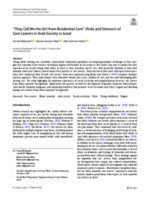
India’s 23.6 million orphaned and abandoned children often rely on overburdened caregivers in child care institutions, where staff shortages and high demand affect quality of care. This study evaluates a capability-building program by Udayan Care and Duke University, showing how strengthening caregivers’ skills, knowledge, and wellbeing can improve outcomes for vulnerable children.

File

The evolution of priority for the care of orphans and vulnerable children in Zambia

Yusra Ribhi Shawar, Joseph Mumba Zulu

Given the severe impacts of the HIV/AIDS epidemic and chronic poverty, the care of orphans and other vulnerable children (OVC) is a significant national issue in Zambia. This article examines the evolution of governance and policy for the care of OVC and identifies the factors that have shaped Zambia’s priority for and capacity to address this issue.

File

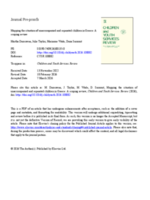
Political factors shaping national systems of care for orphans and vulnerable children in low-income countries: Scoping review and framework

Yusra Ribhi Shawar, Shafkat Meraj, Adam D. Koon, and Jeremy Shiffman

This article reviews the political factors shaping orphan and vulnerable children (OVC) care systems in low-income countries, highlighting weak governance, limited political commitment, and heavy dependence on external actors. It introduces a social science–based framework of eight key factors—spanning policymaking, governance, and context—to guide research and strengthen OVC care systems.

Image
Image of article