
Pathways to University - The Journey Through Care: Findings Report Two
The authors of this study conducted research with 234 care experienced university students in England and Wales to explore their experiences of the journey through care.
File

The authors of this study conducted research with 234 care experienced university students in England and Wales to explore their experiences of the journey through care.
The authors of this study conducted research with 234 care experienced university students in England and Wales to explore the factors that promoted access to higher education.
This report provides an insight into the Permanence and Care Excellence (‘PACE’) programme – a Quality Improvement programme underway from 2014-2020 which engaged with local authority partnerships in 27 of the 32 Scottish local authority areas. The programme was aimed at supporting local authority partnerships across Scotland to reduce permanence planning timescales for looked after infants, children and young people using a Quality Improvement framework.
This article examines the reasons that child protection has not achieved gains made within comparable professions through statistical methods.
This article reports on the use of a suite of validated instruments to measure the impact of services on children and their parents in receipt of services provided by an Irish Non-Governmental Organisation (NGO) across their seven family centres.
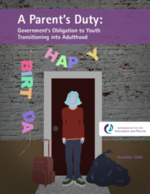
This report looks at what is known about outcomes for young people in care transitioning into adulthood in British Columbia, with particular focus on the over-involvement of the child welfare system in the lives of First Nations, Métis, Inuit and Urban Indigenous children and youth in care. The report calls on government to enact comprehensive and lasting change for the young people in its care as they transition into adulthood.
This Chapter elucidates the objectives, scope, and challenges in the implementation of the 1993 Intercountry Adoption Convention.
This study assesses the internal representations of three groups of children, as measured by the Story Stem Assessment Profile (SSAP). These were: (1) a maltreated, late-adopted (MLA); (2) a non-maltreated, early-adopted (EA) sample; and (3) a non-maltreated community sample (COMM).
A cross-sectional study was conducted in five counties of five provinces in China to investigate the effects of age at separation and duration of maternal separation on the early development of left-behind children.
This article explores birth parents’ views on their needs and perceptions of support delivered by two different interventions: one offering support to individuals and the other providing a parental group.