Save the Children Documentary: Locked down - how children globally faced Covid -19
All over the world, the pandemic has turned children's lives upside down. In this episode of Save the Children Documentary, they share their stories.
All over the world, the pandemic has turned children's lives upside down. In this episode of Save the Children Documentary, they share their stories.
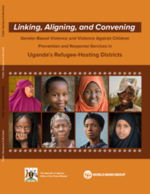
The Development Response to Displacement Impacts Project (DRDIP) analysis includes a comprehensive mapping of services for GBV and VAC prevention and response across the key sectors of health, police, justice, and social services in refugee settlements and host communities.
This article explores changes in policy and practice in children’s services in the UK over the past 40 years and discusses the thinking that has underpinned them.

In this article, the authors highlight a framework distinguishing experiences of trauma from experiences of deprivation and use the examples of posttraumatic stress disorder and reactive attachment disorder to demonstrate how greater specificity in our understanding of early adverse caregiving can lead to more accurate and targeted diagnosis and treatment for young children.
This article documents the author's experiences with the state’s contemporary removal of Aboriginal children in Western Australia (WA) and the practice of Aboriginal Family Led Decision Making (AFLDM), a family led decision making process supported as best practice for Aboriginal families.
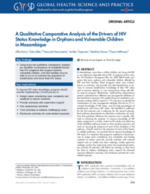
The authors of this study applied fuzzy-set qualitative comparative analysis (QCA), based on 119 interviews, to identify the combinations of case management attributes that led to (1) increased knowledge of HIV status, and (2) high percentages of beneficiaries with known HIV status participating in a program that serves orphans and vulnerable children affected by HIV and their families in Mozambique.
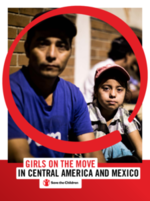
The primary purpose of this report is to recommend evidencebased strategies to improve the relevance and effectiveness of field interventions that target development outcomes for girls on the move in Central America and Mexico.
This report from Save the Children presents a qualitative study with the participation of girls and young women who are in transit or have migrated to Greece, Serbia and Bosnia and Herzegovina.
This report consolidates findings from a rapid participatory consultation with: (1) migrant girls in the Northeastern Colombia border region, (2) front-line practitioners providing services to migrant children and their families, and (3) Save the Children teams in Colombia.
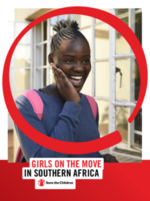
This report’s primary purpose is to recommend evidence-based strategies to improve the relevance and effectiveness of field interventions that target development outcomes for migrant girls in Southern Africa.