Investigating psychosocial problems of orphan children in primary schools
The purpose of this study was to investigate the psychosocial problems of orphan children in public primary schools in Ethiopia.
File
The purpose of this study was to investigate the psychosocial problems of orphan children in public primary schools in Ethiopia.
This foundational chapter attempts to provide readers with content to assist in their understanding of the characteristics, role, and experiences of kinship elderly caregivers of children affected and/or infected by HIV and AIDS.
This paper examines the efficacy of extended family system in OVC care and support in the Gutu District of Zimbabwe.
This study assesses whether sex of the caregiver is associated with HIV status of orphans and vulnerable children (OVC) as a valuable strategy for enhanced pediatric case findings.
This chapter focuses on the U.S. as the nation with the largest number of adoptions. Although adoptions represent a small portion of family growth, from a demographer’s point of view they are worth investigating.
The research objective is to understand the development of collaboration in relation to the multiple issues that influence the educational attainment of youth in out-of-home care.
The authors of this article contend that the government of Zimbabwe adopted traditional practices of child welfare in its National Orphan Care Policy, yet it did not also bring the apparatus (Ubuntu) which made the traditional practices successful in traditional society.
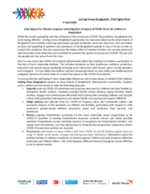
To ensure that the well-being of the most vulnerable children are not compromised, Joining Forces Bangladesh appeals to the Government of Bangladesh, international communities, business sector, and media and civil society to take the measures outlined in this joint appeal.
This study addressed three research questions: (1) What are ACE totals in this sample of foster parents and how do they compare with the original CDC-Kaiser study? (2) Does foster parents’ ACE exposure relate to foster child behavior? (3) Is the relation between foster parents’ ACEs and children’s challenging behaviors different based on the specific ACE?
This paper reports findings from an innovative arts-based intervention with Looked After Children and young people and concludes that holding competing value sets in creative tension is central to the success of the programme in helping young people to cope with and contest social harm.