COVID-19: Puntos claves para tener en cuenta a la niñez
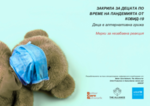
Esta página de World Vision presenta puntos claves para tener en cuenta a la niñez en las acciones Gubernamentales en América Latina y Caribe en tiempos de COVID 19.
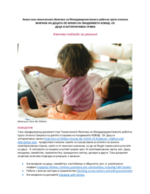
El segundo webinar organizado por RELAF en el contexto de la pandemia causada por el COVID-19 tuvo como objetivo proveer herramientas sobre el apoyo y contención; los contactos con sus familias y amigos; el manejo de la información; las estrategias terapéuticas tanto para niños y niñas en residencias, como en familias de acogida y en procesos de vinculación pre adoptiva.
En el Conversatorio se trabajó sobre la preparación y acompañamiento de los niños y niñas en hogares de acogida y familias de acogida, los contactos con sus familias y amigos, manejo de la información, entre otros temas.
Plan International Australia lanzó una guía que ayuda a madres, padres y tutores a orientar algunas de las difíciles conversaciones y situaciones que pueden surgir con niñas y niños durante esta abrumadora pandemia.
Save the Children ha creado cinco breves guías temáticas para padres y madres, en el marco del proyecto ‘A tu lado’.
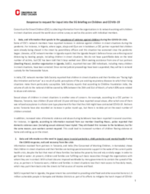
This checklist presents 40 questions to guide a rights-respecting response to the COVID-19 crisis that addresses the needs of groups most at risk, including people living in poverty, ethnic and religious minorities, women, people with disabilities, older people, LGBT people, migrants, refugees, and children.
In this Guiding Note, the African Committee of Experts on the Rights and Welfare of the Child (ACERWC) expresses its grave concern on the ongoing global outbreak of COVID-19 virus and strongly recommends Members States of the African Union integrate child protection measures in their responses to the global pandemic of COVID-19.
This technical note calls for Protection from Sexual Exploitation and Abuse (PSEA) to be integrated into the response to COVID-19.
This paper utilises data generated through an ‘empowerment group’ for care‐experienced young people; it illustrates how an ecological understanding of agency, as a heuristic, might further understanding of the lives of care‐experienced young people.
This paper develops understandings of how being publicly identified and consequently labelled as ‘looked after’ can have damaging consequences for young people, particularly in how they are perceived by their peers in the context of schooling.
In this article, the authors draw on case study data from the Australian Baby Makes 3 (BM3) programme to explore factors that promote father engagement in parenting support programmes.
In this study, the authors analysed data from 27 interviews with parents whose children were removed by child welfare and four focus groups totalling 18 staff from a parent education service provider.
Through the lens of a care framework, the present study aims to explore service providers' perceptions of families caring for CWD in resource‐poor settings in South Africa.
Preliminary findings from studies using abbreviated formats of Parent-Child Interaction Therapy (PCIT) suggest effectiveness of such adaptations in reducing externalizing behavior in foster children and maintaining behavioral improvements several months after the end of the treatment.
This systematic review aimed to explore if and how the voices of young people in out-of-home care (OoHC) are represented in research examining their health.
This article explores how we can re-imagine child and youth care practice with African Canadian youth.
This article, an auto-ethnographic collaboration between a social work professional and two care leavers, aims to address the problems with records compiled by care workers, social workers and other relevant personnel by constructing a ‘virtual archive’ consisting of several hypothetical records compiled in the style typically employed by caseworkers, which are then critiqued by the care leavers.
The U.S. Center for the Study of Social Policy (CSSP) is working to create resources designed to give a voice to children, youth, and families at most risk during the COVID-19 crisis. This clearinghouse is a collection of all of their resources to date.
This document provides programme guidance across numerous migrants and displaced (M&D) children contexts.
This guide aims to help parents and families of children who are looked after in the care system. The guide also provides information for families whose children have been adopted.
This is a summary of the key points from the many resources on cash and voucher assistance (CVA) and COVID.
This tipsheet serves as guidance to help field teams think through different ways to mitigate the spread and impact of COVID-19 through ongoing cash and voucher assistance (CVA), inform the adaption of CVA programming in the context of COVID-19, and promote sensitivity to changing market dynamics and prices.
This webinar provides an overview of the issue of nurturing care during the COVID-19 pandemic, with lessons learned from past emergency contexts, current data on the prevalence of violence against children, presentation of guides and strategies to promote the protection of children and country presentations on strategies being currently implemented.
This article lists 10 issues that should be addressed in the effort to provide emergency child care for at least part of the workforce, promoting the safety and healthy development of young children while supporting those working in emergency settings.
The Child Protection Area of Responsibility (CP AoR) has developed a series of messages calling on governments to take actions to protect children in their COVID-19 responses.