Support LGBTI Youth
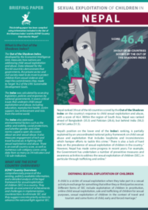
Elevate Children’s Funders Group and Global Philanthropy Project have developed a collection of resources on supporting lesbian, gay, bisexual, transgender, gender expansive and non-conforming, and intersex (LGBTI) youth.
This report is an analysis of the feedback that the Elevate Children Funders Group (ECFG) received from a six-question survey with over 70 non-funder stakeholders.
This analysis assessed the current state of child neglect through much of the world, including its prevalence and efforts to address it.
The objective of this article is to provide evidence of the positive impact of the CRC on the right to a remedy for child victims of violence in selected African states, while highlighting existing gaps.
The Finding the Way Home documentary highlights the painful realities of the eight million children living in orphanages and other institutions around the world, telling the stories of six children in Brazil, Bulgaria, Haiti, Nepal, India and Moldova who have found their way into the care of loving families after spending periods of their lives in an institution.
The Case Management Task Force (CMTF) of the Alliance for Child Protection in Humanitarian Action commissioned this project to gather and draft key lessons learned on the Case Management Supervision and Coaching initiative. Key questions that the Task Force wanted to address included feedback on the interagency country collaboration, the effectiveness of the localization approach, the successes and challenges of roll-outs in the eight participating countries, and the impact on case management teams’ supervision practices.
This qualitative, phenomenological study explores experiences of resilience among OVC benefiting from programmes implemented by Future Families (a non-profit organisation) in the Gauteng Province of South Africa.
This article elaborates on provisions concerning the international protection system for minor migrants. It examines entry strategies put into place by young migrants facing the Spanish migration system.
This report, which is also the fifth in the series, reflects on how children and the realisation of their rights continue to challenge our conscience even today.
The aim of this study is to examine mental ill-health amongst children known to social services based on care exposure including those who remain at home, those placed in foster care, kinship care or institutional care and the general population not known to social services.
The article is based on interviews with 22 children’s spokespersons in the Norwegian arrangement for indirect participation in care proceedings, and presents analyses of the spokespersons’ experiences of contradictions and dilemmas in their practices.
Theoretically informed by intersectionality, queer, and feminist theories, the purpose of this community based qualitative research study was to gain a nuanced understanding of the experiences of 25 diverse LGBTQ former foster youth before, during, and after being in foster care.
This study analyzes longitudinal statistics from 18 years of Hope and Homes for Children programs in Romania to demonstrate the cost savings and ability to support a higher number of children at risk if the state were to invest money into programs that allow children to remain in a family environment, rather than be placed in institutional care.
This study used a scoping review method to map the scope of research regarding children’s outcomes in current foster care in China.
This paper presents the perspectives of a small sample of eight kinship caregivers, who are grandparents raising their grandchildren in a mid-Western state [in the USA].
This qualitative research study examined foster care alumni’s advice for youth in care, caregivers, and child welfare caseworkers on how to best handle placements moves.
The authors of this study investigated incidence of secondary traumatic stress (STS) and psychological predictors relevant to secondary and primary stress appraisal in UK foster carers.
The aim of this study is to utilise nationwide social services data from two countries (Northern Ireland (NI) and Finland), with similar populations but different intervention policies, linked to a range of demographic and health datasets to examine the mental health outcomes of young adults in the years following leaving care.
Cross-sectional analysis by the Scottish Government show that the educational outcomes for looked after children are much poorer than for other children in Scotland. This presentation will discuss methods to create a longitudinal data set from these data and thus infer how a child’s lifetime history of care relates to their educational outcomes.
This handbook, produced by the Directorate General of Human Rights and Rule of Law, is a practical tool for legal professionals from Council of Europe member states who wish to strengthen their skills in applying the European Convention on Human Rights and the case law of the European Court of Human Rights in their daily work.
Exposure to childhood victimization and adversity (CVA) is pervasive for child welfare (CW) involved youth. However, most research with CW samples has focused on types of maltreatment and fails to recognize the additive influence of exposure to CVA beyond maltreatment. For this study, a subsample aged 8 to 17 (n = 1,887) was drawn from the National Survey of Child and Adolescent Well-Being (NSCAW) II.
The purpose of this study was to estimate the costs of hospitalization for physical and mental health conditions by child protection status, including out-of-home-care (OOHC) placement, from birth until 13-years, and to assess the excess costs associated with child protection contact over this period.
This particular paper has been focused on the multiple discriminations suffered by women and girls (including unaccompanied minor girls) and on the problems that they face in the field of refuging and immigration, as recorded to a large extent through informal interviewing of public agencies staff that are involved in this issue.
The study included 60 foster children and 42 children living in biological families as a comparison group. Caregiver stress was measured using the Parenting Stress Index, while child problem behavior was measured using the Strengths and Difficulties Questionnaire.
This Australian longitudinal, qualitative study explored child protection worker perceptions and experiences of resilience to inform understandings of worker resilience, and implications for worker functioning and workforce retention.