
Displaying 441 - 450 of 1119
For this study, ten multilevel meta-analyses were performed to examine factors that can affect instability of foster care placement.
This article illuminates current child protection services (CPS) worker practices in situations of domestic violence in Alberta, Canada where inclusion and exclusion decisions are made for service provision, and the ways in which documents reflect these day-to-day practices.
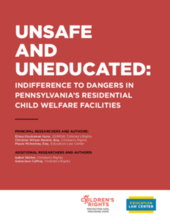
This report is divided into two parts. Part A focuses on the dangers that occur at Pennsylvania’s residential facilities when the Pennsylvania Department of Human Services (“PA-DHS”) fails to provide meaningful oversight. Part B provides background on child residents’ educational rights, details the inferior education that children at these residential facilities receive, especially those children with disabilities, and the devastating consequences.
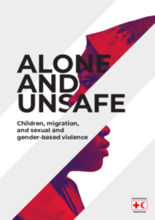
This study seeks to improve understanding of the risks and types of sexual and gender-based violence faced by children who migrate on their own, as well as the unfortunate and widespread gaps in protection and assistance for these children.
This study sought to assess the combined effects of physical neglect, a major embodiment of the left-behind phenomenon, and the trauma of being left behind on subsequent behavioral problems of children in rural China.
This study provides an analysis of the ‘investigative turn’ in England by comparing two large cohorts of children, one whose fifth birthday was in 2011–12 and the other in 2016–17.
This article examines how Cambodians view the causes and effects of child abuse and analyses its underlying cultural forces.
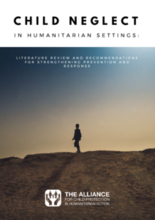
The purpose of this literature review from the Alliance for Child Protection in Humanitarian Action is to synthesise evidence on the prevalence, patterns and impacts of child neglect in humanitarian contexts.
Using data from age 3 of the Fragile Families and Child Wellbeing Study, the current study explores the complex relationships between U.S. childcare subsidies and neglect.
The present study examined the effectiveness of Family Group Conferencing (FGC) in child welfare.