Displaying 561 - 570 of 999
This paper investigates how ‘care leaver’ is discursively constructed as a group identity, by analyzing 18 written personal experience stories from several charity websites by people identified or who self-identify as care leavers.
The study reported here uses a random-assignment evaluation design to assess the impact of the YVLifeSet program on young adults transitioning to adulthood from the child welfare and juvenile justice systems in the state of Tennessee.
This video presents the work of the FARE family strengthening program in Uganda to prevent separation of families and reintegrate children who are separated from their families, including the story of one young person and his family who were impacted by the program.

This paper focuses on youngsters’ experiences of continuity in relation to youth-care services.
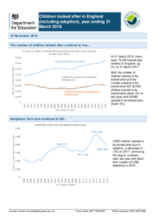
This statistics publication from the UK Department for Education provides information about looked after children in England for the year ending 31 March 2018.
This Annie E. Casey Foundation brief, which utilizes the most comprehensive data set ever collected across all 50 states of the US, fills in key details about the lives of young people who have experienced foster care.

This meta-analysis synthesized findings from existing evaluations to examine whether and to what extent Family Treatment Drug Courts (FTDCs) participants achieved better reunification and safety outcomes than non-participants.
This paper reviews evidence from some well evaluated US reunification programs to investigate positive impact on post reunification outcomes such as preventing future maltreatment or future re-entry into care.
These updated UN High Commissioner for Refugees (UNHCR) Guidelines provide guidance on determining the best interests of the child in decisions affecting children at risk, in particular children who are separated from their parents and families.
This guidance from the UK's Department for Education presents a framework to help social care and criminal justice agencies keep looked-after children out of the criminal justice system.