File

Displaying 51 - 60 of 61
Orphanage tourism is on the rise in Myanmar and in other countries in the region such as Cambodia and Thailand, according to the article.
This research brief provides an overview of an impact evaluation of the “Happy Families Program,” conducted by the International Rescue Committee (IRC). The Happy Families Program is a parenting and family skills intervention designed for Burmese families living on the Thai-Burmese border.
This report presents findings from the impact evaluation of a parenting and family skills intervention for the displaced Burmese population in Thailand called the Happy Families Program which was implemented by the IRC from 2011 to 2013.

This presentation from IRC, given at the State of the Evidence on Children’s Care Symposium, outlines the findings of recent research on parenting interventions in low-resource settings.
The government of Myanmar is embarking on the development of a national child protection policy – the first of its kind for the country – and has asked for UNICEF technical assistance to support the drafting process.
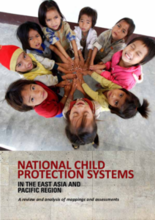
This report presents the findings of a mappings and assessments review of child protection systems in 14 countries including Cambodia.
This Handbook aims to provide guidance for Save the Children staff, NGO partners, Community Child Protection Groups and community volunteers in Myanmar in protecting the welfare of children living with extended family members.

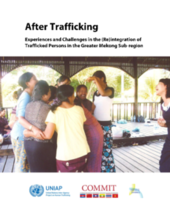
This study, coordinated by the United Nations Inter-agency Project on Human Trafficking, draws findings from in-depth interviews with 252 trafficked persons about their experiences of (re)integration, including successes and challenges, as well as future plans and aspirations.
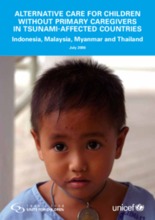
An assessment of alternative care responses for children without primary caregivers in tsunami-affected regions of Malaysia, Myanmar, Indonesia, and Thailand. Includes good practices, recommendations, and detailed country reports.
This presentation was given at the Alternative Care Workshop in Bangkok in November 2005.