From Institution to Foster Care: Olesea
Olesea, a 24-year old from Moldova with care experience, shares her story of transitioning from a child care institution to foster care.
This webinar was organized by India Alternative Care Network (IACN) in association with Miracle Foundation India, on April 28, 2023, with the objective to understand gatekeeping, it's components, tools, mechanisms, stakeholders and their role in gatekeeping and learning some promising practices at the primary and secondary levels of gatekeeping.
The Hope for Homes team in Rwanda helps communities become more inclusive for children with disabilities.
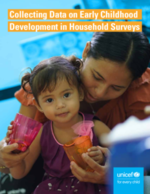
Accurate and reliable data on children living in residential care institutions are essential. However, these children are not identified through household surveys and, as a result, are not typically included in official national statistics on key indicators of child well-being. This includes indicators that comprise global monitoring frameworks, such as the Sustainable Development Goals. To help address this data gap, UNICEF has developed the first-ever comprehensive package to collect data on children living in residential care settings. Claudia Cappa, Senior Adviser for Statistics and Monitoring, Data and Analytics Section, DAPM/UNICEF HQ, explains more.
Maud de Boer-Buquicchio, CHIP President, discusses the measures in place to ensure that the many children that crossed the Polish/Ukraine border alone travelled with identity documents that would allow them to access child protection measures as they proceed on their journey.
The Ukraine Recovery Conference 2023 focussed on action to help Ukraine build back better, greener and as a more resilient and prosperous European nation. In particular, URC 2023 aimed to generate greater momentum on the role of the private sector – and the reforms required to drive investment – as essential elements for Ukraine’s long-term recovery.
This statement was released by the Working Group on Orphanage Trafficking and Exploitation -- a global coalition of Members of Parliament, government leaders, survivor leaders, and key stakeholders committed to combatting orphanage trafficking and the exploitation through raising awareness and identifying, creating, and implementing tools that curb the demand for orphanage trafficking and stop the exploitation of children in residential care settings, including orphanages. The Working group aims to raise awareness and combat orphanage trafficking at the policy level globally.
This introductory learning module has been developed by the Alliance for Child Protection in Humanitarian Action. The learning module is designed to strengthen participants' overall understanding of prevention related elements from the UASC Handbook and Toolkit and the ACE Toolkit.
This IACN report outlines the importance of families for the emotional, physical, and cognitive growth of children. The authors discuss that all efforts should be made to provide family-based care to children without parental care, and institutionalisation should be a measure of last resort for the optimum development of children. The report draws on the experiences of eight families in kinship care arrangements and the children placed with them.
The focus of this document is to support, inform and empower social workers across the UK in their ongoing practice and consideration of issues that arise in relation to people arriving and staying under the UK Ukraine visa schemes.