Family relationships between normative orientations and lived diversity – experiences of care leavers with their mothers and fathers

Stephan Sting, Georg Streissguertl , Julia Weissnar

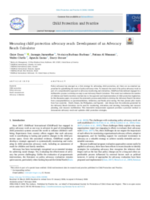
This article examines how care leavers navigate their relationships with biological mothers and fathers. It is based on a qualitative study from Austria, which focused on social networks and family relationships of 18-to 27-year-old care-experienced youth.

Image
Screenshot of article

Understanding the burden of COVID-19 orphanhood and caregiver loss among children and adolescents living in South Africa

Christina Laurenzi, Ramsha Hisham, Tatenda Mawoyo, et al.

This study examined the short-term impacts of COVID-19-related orphanhood on children and adolescents in peri-urban Khayelitsha, South Africa, finding that those who lost a parent or primary caregiver experienced significantly greater mental health burdens, food insecurity, caregiving responsibilities, and engagement in social risk behaviours compared to peers without such loss.

File

The Resilience of the Mind: Understanding Cognitive Strength in Abused Orphaned Children in Foster Care

Jaya Bharti, Manisha Sharma

This study explores the experiences of exploited orphans in institutional care in India and the factors that contribute to their cognitive resilience, using qualitative interviews with 20 children aged 12–16. Findings show that resilience is shaped by problem-solving skills, goal setting, self-regulation, peer support, education, and stable caregiving, highlighting the need for policies and interventions that strengthen both individual and environmental supports.

File

The Social Challenge of Unaccompanied and Separated Migrant Children in South Africa: Implications for Social Work

Ntobeko Bambeni

This paper reviews the challenges faced by unaccompanied and separated migrant children (USMC) in South Africa and the implications for social work practice. It highlights how social workers often lack adequate training and resources to meet the complex, multicultural needs of USMC, emphasizing cross-cultural social work as the most appropriate model for support.

File

A scoping review of the transition experiences and outcomes of young women leaving residential out-of-home care

Yujie Zhao, Jacinta Waugh, Philip Mendes

This scoping review analyzes 31 studies on young women leaving residential care worldwide, highlighting their unique gender-specific challenges such as early pregnancy and gender-based violence. Despite recurring patterns across contexts, research on this group remains limited, especially as they are often treated as a subset of broader studies, pointing to the need for more focused investigation.

File

“You are nothing and you have nothing”: Exploring social justice for youth leaving care in African contexts

Berni Kelly, Adrian D. van Breda, Kwabena Frimpong-Manso

This article uses Nancy Fraser’s social justice framework to examine the experiences of youth leaving care in Ghana, South Africa, Uganda, and Zimbabwe, drawing on interviews with 45 care-leavers conducted by peer researchers. Findings reveal how intersecting injustices—such as stigma, exclusion, and lack of resources—undermine their transition to adulthood, underscoring the need for stronger aftercare services, recognition of diverse identities, and greater youth participation in shaping policy and support.

File

A System Stretched Beyond Its Elastic Limits: The South African Foster Care Grant System

Sipho Sibanda

This review explores South Africa’s foster care grant system, highlighting how rising numbers of children in foster care have strained social workers and overwhelmed the system. It examines challenges such as lapsing foster care orders, dependency concerns, and unsustainable practices, while offering recommendations to strengthen the system and better support children and families.

File

Placing Children in Residential Care: A Scoping Review of Decision-Making and Matching Criteria

Chiara Monti

This scoping review examines how social workers decide to place children in residential care and how facilities are selected, drawing on 10 global studies analyzed through the Decision-Making Ecology framework. Findings reveal that decisions are often shaped by a child’s age, clinical needs, and professional discretion, but frequently lack structured assessments, consistent child involvement, and reliable information—pointing to the need for stronger collaboration and research to support more child-centred practices.

File