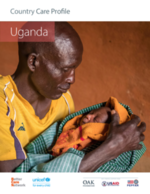
Country Care Profile: Uganda
This country care profile provides an overview of key lessons learned in the children’s care reform process in Uganda, including successes, challenges and areas for progress, and gaps in learning and best practice.
File
This country care profile provides an overview of key lessons learned in the children’s care reform process in Uganda, including successes, challenges and areas for progress, and gaps in learning and best practice.
At a time when the Global Charter on Children’s Care Reform is calling for stronger commitment and action to ensure children grow up in safe and loving families, FAFICA collaborated with the Global Campaign on Children’s Care Reform Working Group to convene the webinar “Over 30 Million Reasons to Act: Advancing Family Care for Children in Africa.”
This review examines interventions for orphans and vulnerable children in South Africa, identifying a wide range of approaches but highlighting uneven coverage, limited evidence on effectiveness, and challenges such as insufficient funding and government support. It concludes that more sustainable impact requires integrated interventions that first address basic needs and then support children’s psychological and developmental well-being.
This study examines the long-term effects of early institutional care in Zurich, finding that infants exposed to severe psychosocial deprivation faced significantly higher mortality risk and lost an estimated 12 years of life compared to peers raised in the community. It highlights that lack of nurturing interaction in early childhood has lasting consequences into adulthood, underscoring the critical importance of responsive care for child health and survival.
This study explores the large-scale implementation of the Parenting for Lifelong Health for Teens (PLH-Teens) program in Tanzania, examining implementers’ experiences in delivering a parenting intervention to over 75,000 beneficiaries in a low-resource setting. It finds that while scaling evidence-based programs to reduce violence against children is feasible, long-term success depends on government support, strong local engagement, and addressing practical challenges to sustain implementation at scale.
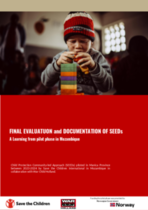
This report presents findings from the SEEDs community-led child protection pilot implemented in Manica Province, Mozambique (2023–2024). The approach aimed to strengthen community ownership, enhance local capacity, and generate evidence for scalable child protection programming.
This study examines the challenges of deinstitutionalization (DI) in Ghana, particularly for child trafficking survivors, highlighting how structural, socio-cultural, and economic factors hinder safe reintegration into family-based care. It finds that while policies promote alternatives to institutional care, effective DI requires sustained investment in community services, poverty reduction, and trauma-informed support to prevent re-trafficking and ensure long-term child well-being.
This study examines institutional care policy and operations in Nigeria using a qualitative literature review, with a focus on how children’s rights frameworks shape child welfare practices. The study concludes that institutions can be improved to be comparable to family living but they should be the last resort.
The 2025 BICON Conference Summary Report captures the outcomes of the 6th Biennial International Conference, held in Kuala Lumpur, Malaysia on 15–16 October 2025. It brings together key discussions, insights, and recommendations from across the conference, providing a clear direction for strengthening care reform and advancing inclusive, family-based systems for children.
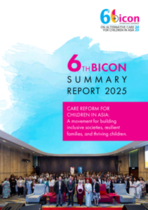
The 2025 BICON Conference Report captures the outcomes of the 6th Biennial International Conference, held in Kuala Lumpur, Malaysia on 15–16 October 2025. It brings together key discussions, insights, and recommendations from across the conference, providing a clear direction for strengthening care reform and advancing inclusive, family-based systems for children.