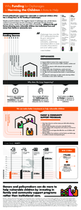
Evaluation Brief: Evaluating Systems and Organizational Change in Child Welfare Settings
This brief explores challenges and strategies for evaluating systems and organizational change in US child welfare settings.
This paper outlines a psychological skills group for unaccompanied asylum-seeking young people with a focus on cultural adaptations in the context of a UK mental health service.
The authors of this paper aimed to examine the available evidence on the impact of overseas parental migration on healthcare seeking for common childhood illnesses and the nutritional status of children left-behind under five years of age.
This study compared the prevalence of mental health and psychosocial problems between left-behind children (LBC) and controls in Sichuan province, China.
The primary aim of this meta‐analysis was to compare the incidence rates and factor scores of behavioural problems in Left‐behind children (LBC), who now account for more than one‐fifth of Chinese children, and non‐LBC.
This comprehensive meta-analysis examined the pooled prevalence of depressive symptoms in ‘left-behind children (LBC)’ in China and its associated factors.
This study examined the effects of grandparent–grandchild cohesion on the cross-lagged associations between depression and cultural beliefs about adversity in a sample of 625 rural left-behind children in China.
This thesis aimed to systematically review literature on the types, measurement and effectiveness of residential staff training, focussed upon psychosocial outcomes.
This article investigates policy in the Philippines relating to the protection of children, which, despite policy efforts in this space, and growing evidence of child maltreatment and its impact, remains unexamined by the literature.
The European Commission Directorate-General for International Cooperation and Development (DG DEVCO) commissioned SOS Children’s Villages International to undertake case studies of arrangements for ‘alternative child care’ in six non-European countries across three continents to help inform the EU’s future strategy for provision of support for children in countries outside Europe. This report is a case study of one of the six countries, Ecuador.
The European Commission Directorate-General for Justice and Consumers commissioned SOS Children’s Villages International to undertake case studies of arrangements for ‘alternative child care’ in six non-European countries in three continents to help inform the EU’s future strategy for provision of support for children in countries outside Europe. This report is a case study of one of the six countries, Chile.
The overall purpose of this study is to present an ‘introduction’ to alternative care systems in Central and South America (CSA).
The objective of this study is to examine the intergenerational transmission of out-of-home care in Sweden.
This factsheet for families offers tips for helping a child transition from foster care to adoption.
This bulletin for professionals explores concurrent planning, which is an approach that seeks to reduce the amount of time children spend in foster care by considering all reasonable permanency options the moment a child enters the system.
The present longitudinal study explored the impact of initial emergency shelter placement on long-term externalizing behavior (i.e., aggression, delinquency) and internalizing symptom (i.e., anxiety, depression) trajectories, and whether kinship involvement moderated the effect of shelter placement on behavioral outcomes.
In this study, the authors assessed differences in the risk of early motherhood among low-income, maltreated, and foster youth and investigated whether differences likely reflect selection factors versus effects of involvement with Child Protective Services (CPS) or foster care.
This research examined the relationships among family structure (leftbehind status), caregiving, and child depression using archival data from the China Family Panel Studies (CFPS) in both cross-sectional and longitudinal analyses.
In this chapter of Communicating for Social Change, the author presents an analysis of the micro- and macro-level challenges of transnational separation of Overseas Filipino Worker (OFW)-parents and their left-behind children, which consequently beget psychosocial distresses among transnational family members.
This randomized controlled trial (RCT) evaluated the effectiveness of the Incredible Years® (IY) Parenting Program in modifying children's behavioral problems, parenting practices and parents' psychological well-being among families under child protection and using other special support services.
The objective of the mission was to gather data on Honduras as a case study to support the IFRC global study on smart practices for protecting unaccompanied and separated children (UASC) from sexual and gender-based violence (SGBV) through health and psychosocial services in last mile locations.
This study examined whether children with Child Protective Services (CPS) involvement who were in foster care had more advanced receptive vocabulary than children with CPS involvement who resided with their birth parents.
This book focuses on the lives of six mothers who had been pariahs and then became partners with child welfare commissioners, social workers, lawyers, foundation officers, and child welfare agency executives. It recounts how their courage and resilience brought about the most significant changes in the history of New York’s child welfare system.
The Routledge Handbook of Critical Social Work brings together the world’s leading scholars in the field to provide a cutting-edge overview of classic and current research and future trends in the subject.