Residential Family Centres: National Minimum Standards
This document contains the UK National Minimum Standards (NMS) applicable to residential family centres.
This document contains the UK National Minimum Standards (NMS) applicable to the provision of adoption services.
Volume 2 of the Children Act 1989 Guidance and Regulations provides guidance, primarily addressed to local authorities and their staff in England, about their functions under Part 3 of the Children Act 1989 which concerns the provision of local authority support for children and families. In particular it describes how local authorities should carry out their responsibilities in relation to care planning, placement and case review for looked after children.
The Training, Support and Development (TSD) standards form part of a foster carer's induction into the role. They provide a national minimum benchmark that sets out what foster carers should know, understand and be able to do within the first 12-18 months after being approved.
This guide provides professionals in the UK with information about registering as a children’s social care provider. It helps those considering registration to decide whether to apply and what processes their applications will go through before a decision is made as to their suitability to be registered.
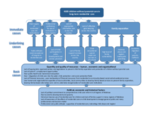
This graphic provides a visual representation of the causal framework of children’s institutionalization in Moldova. It was developed as part of the USAID/DCOF-funded project “Protecting children in Moldova from family separation, violence, abuse, neglect and exploitation.”
This paper was submitted to the Inter-Agency Task Team (IATT) on Children affected by HIV and AIDS in June 2013. It presents findings from a study commissioned by the IATT.
This preliminary report analyzes the practice of foster care in Argentina. The material will be useful for the development of foster care services in the Latin American region, due to the fact that the situation of foster care in Argentina can be seen as a model of the current regional context.
This paper is based on The Latin American Report: The situation of children in Latin America without parental care or at risk of losing it. Contexts, causes and responses, which was prepared using reports from 13 countries in the region. The paper gives an overview of the state of one of the most fundamental rights - the right to parental care, a keystone for the right to live in a family and a community.
This paper, produced by RELAF, is part of a series of publications on children without parental care in Latin America: Contexts, causes and answers. This document, and others in the series, pertains to the broad topic of children without parental care and examines the particular situation of institutionalised children.
The main aims of this assessment were to identify and address problems in both the domestic and intercountry adoption processes, with a view to assisting Viet Nam in its preparations to accede to the 1993 Hague Convention on Intercountry Adoption (THC-93); and to review the new draft law on adoption, and propose any amendments that may appear necessary to ensure compliance with international standards and good practice.
The 2013 KIDS COUNT Data Book provides a detailed picture of how children are faring in the United States. In addition to ranking states on overall child well-being, the Data Book ranks states in four domains: Economic Well-Being, Education, Health, and Family and Community.
General Comment 14, issued by the Committee on the Rights of the Child, refers to article 3, paragraph 1, of the Convention on the Rights of the Child that asserts the right of the child to have his or her best interests taken as primary consideration in all actions or decisions that concern him or her (in both the public and private spheres).
The USA-based National Child Traumatic Stress Network has recently released a second edition of the Child Welfare Trauma Training Toolkit, which is part of the Child Welfare Trauma Training course. The course assists those in the field of child welfare who wish to learn more about child welfare and trauma.
This paper provides details of research into the gatekeeping system in Bulgaria for children under three and examples from recent Bulgarian and international practice. It suggests that gatekeeping could benefit from a social development orientation including activities to combat poverty and promote social inclusion through supporting community and family strengths.
This paper presents a comprehensive literature review of evidence-based parenting programs from around the world. The report reviews published literature from 2000 to 2012 and summarizes empirically based recommendations for supporting and strengthening child-caregiver relationships in the context of AIDS and poverty.
Following three previous initiatives – the Road to Toronto, the Road to Vienna, and the Road to Washington, The Coalition for Children Affected by AIDS, with the cooperation and support of other UNICEF, UNAIDS and organizations, led the Road to Melbourne meeting in New York on May 30-31, 2013. The objective of the meeting was to influence funder and policy-maker priorities, and country-level practice for children affected by AIDS and their families.
This country care review includes the care related Concluding Observations adopted by the Committee on the Rights of the Child as part of its examination during the sixty-third session (27 May-14 June 2013) of Israel’s second to fourth periodic reports to the Convention on the Rights of the Child, as well as other care-related concluding observations, ratification dates, and links to the Universal Periodic Review and Hague Intercountry Adoption Country Profile.
This country care review includes the care-related Concluding Observations adopted by the Committee on the Rights of Persons with Disabilities during the seventeenth session (20 March 2017 - 12 April 2017) of the Convention on the Rights of Persons with Disabilities.
This country care review includes the care related Concluding Observations adopted by the Committee on the Rights of the Child as part of its examination during the sixty-third session (27 May-14 June 2013) of Guinea Bissau’s second through fourth periodic reports to the Convention on the Rights of the Child, as well as other care-related concluding observations, ratification dates, and links to the Universal Periodic Review and Hague Intercountry Adoption Country Profile.
This article describes the historical background and current situation of the child welfare system for children without parental care in Poland.
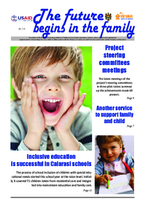
This issue No. 3-4 is one in a newsletter series concerning care reform in Moldova. The magazine was produced by Partnerships for Every Child (P4EC), an NGO in Moldova, with funding from the project, “Protecting children in Moldova from family separation, violence, abuse, neglect and exploitation.”
This paper presents an examination of the linkages between education and the deinstitutionalization of children in Azerbaijan. The paper explores the role of education in social policy and its interplay with economic policy; underlines the links needed between deinstitutionalization, inclusive education and alternative services; and examines how child protection can be understood in the context of inter-Ministerial responsibilities and coordination.
This study, published by the UNICEF Office of Research and Brooks World Poverty Institute, examines the direct, indirect, and implementation impacts of social transfers on child protection outcomes in low- and middle-income countries. The paper discusses the ways in which social transfers can promote the welfare of children by preventing violence, abuse, and exploitation of children and offers recommendations for future research, programming, and practice.
Oxford Policy Management has conducted two rounds of qualitative evaluations of three poverty-reduction and human development programmes run by the BOTA Foundation in Kazakhstan: the Conditional Cash Transfer (CCT) Programme, the Social Services Programme and the Tuition Assistance Programme. Each report produced by Oxford Policy Management includes a description of the methodology and results of the fieldwork as well as conclusions and recommendations.