Orphanages are Not the Answer for Children
According to UNICEF, nearly 90% of the world’s orphans have at least one living parent who cannot afford to safely care for them. The solution is family-based care.
Produced with KESCA, ‘Myths vs Reality’ highlights some of the key misconceptions associated with voluntourism, including how this could unintentionally support institution-related trafficking.
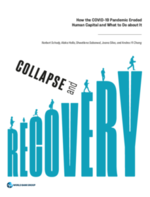
This paper brings together data, evaluations and practical experiences generated over the course of the pandemic to determine the impact of COVID-19 on cash transfers.
This case story is meant to illustrate transition, the actors involved, the challenges and the success factors; recognizing that each transition is an individual process with different starting points, different dynamics and different evolutions.
The story of Identity Mission tells how a program focused on supporting vulnerable children by providing family-based care solutions alongside the local church came to be and what the challenges were to creating a mission focused on family. It is the story of one person’s own transition.
Elli Oswald, Executive Director of the Faith to Action Initiative, reconsiders the best ways American churches can serve some of the world’s most vulnerable children and honor them as image bearers of God.
The Council of Europe Action Plan for the Republic of Moldova 2021-2024 is a strategic programming instrument that aims to bring the Republic of Moldova’s legislation, institutions and practice further into line with European standards in the areas of human rights, the rule of law and democracy. The Action Plan is intended to support the country’s efforts to honour its obligations as a Council of Europe member State. The Action Plan aims to support the Republic of Moldova in its efforts to implement the United Nations Sustainable Development Goals (SDGs) of the UN 2030 Agenda for Sustainable Development.
This report captures the learning at a two-day conference which brought together practitioners and specialists for a critical examination of the Theology and Practice of Child Protection in Africa in Nairobi on May 23 - 24, 2022.
This report maps the family strengthening and alternative care practices across 14 organisations and provides an overview into a number of elements including nature of care, target, coverage, intervention, the longevity of care, linkage to the child protection system, access to sponsorship provided by the State, challenges in implementing the program, among other aspects.
The Transitioning Residential Care Cost Estimation Tool was designed to help you consider the cost implications of #transition and generate an estimate to help with planning & securing a commitment to transition from key stakeholders.
This short document describes the process of ensuring Kafaalah is considered as a family-based alternative care option within Kenya and the work to promote best practice within the model. It describes the journey of developing a framework and standard operating procedures, beginning with the launch of the Kenyan Guidelines on the Alternative Family Care of Children in 2014. Changing the Way We Care worked with many partners and shares the learning on Kafaalah through this document. Changing the Way We Care is a global initiative implemented by Catholic Relief Services, Maestral International, and other global, national and local partners working together to change the way we care for children around the world.
Drawing from a review of global reports and case studies, as well as from information sourced from Global Social Service Workforce Alliance members, this report brings to light the critical role of the social service workforce in different humanitarian contexts—including those related to armed conflict, natural disasters and widespread disease outbreaks—and across the emergency management cycle. It further highlights the challenges and key areas of learning in deploying social service workers in humanitarian contexts.
Această instruire a fost concepută pentru asistenții sociali din Moldova care lucrează cu asistenții parentali profesioniști care au în plasament copii și adolescenți neînsoțiți și separați, veniți aici din cauza crizei din Ucraina.
This training has been designed for social workers in Moldova who are working with foster families caring for unaccompanied and separated children and adolescents who have fled the crisis in Ukraine.
This webinar provides nine lessons learnt on care reform from the COVID-19 pandemic with examples from Malawi, Uganda and Kenya.
In 2021 and 2023 Changing the Way We Care (CTWWC) completed a household survey of children and caregivers, in demonstration countries Guatemala, Kenya and Moldova, to understand their experience of CTWWC services, the protective factors in their families, and the status of child well-being. Part of CTWWC’s evaluations, the resulting findings are designed to help CTWWC and other care reform actors to understand the successes and challenges of reintegration from residential care and the provision of family strengthening support.
This report contains the complete Kenya and Guatemala Household Survey results.
This report describes the process used for designing and facilitating focus group discussions with children and young adults, that informed the household survey design.
The Trainers Package is primarily for Government of Rwanda Child Protection and Welfare Officers, representatives of the NCPD and others who work directly with children and families on reintegration of children, including children with disabilities, from residential institutions to family care. It can also provide useful information to people working in other local government roles, for example District Disability Mainstreaming Officers and Gender &
Family Promotion Officers, as well as people working in non-governmental organizations (NGOs) or community based systems (for example, Inshuti z’Umuryango - Friends of the Family) who support children and families, and particularly those who have contact with children during the reintegration process.
This is a Training Module for the Inshuti z’Umuryango volunteer community-based cadre to support the implementation of the Tubarerere Mu Muryango (TMM) Programme (‘Let’s raise children in families’) led by the National Child Development Agency (NCD).
This present report describes the childcare reform process in Rwanda during 2020 and 2021, against the background of the overall reform initiated since 2012
The objective of this webinar was to present the CPSS approach, and reflect on how this approach, and especially the seven intermediate outcomes of CPSS are relevant to the care reform agenda.
The Office of the United Nations High Commissioner for Human Rights (OHCHR) produces an extensive range of publications and e-products on a variety of human rights-related subjects. This broad portfolio provides information of interest to governments, national institutions, civil society, academia, the general public and the media, among other stakeholders. OHCHR publications and e-products aim to increase knowledge and raise awareness about human rights and fundamental freedoms, and to publicize ways of promoting and protecting them worldwide. They also seek to encourage debate on topical human rights issues under discussion at the United Nations.
The Eastern and Southern Africa Regional Learning Platform hosted a webinar on June 22, 2022, featuring speakers from UNICEF's head office and the Better Care Network who provided detailed examples on the importance of data in Uganda's care reform processes. This purpose of this webinar was to examine the importance of using data to inform care reform, and how data can be collected and used effectively.
Adopcja międzynarodowa nie powinna być realizowana w trakcie lub bezpośrednio po sytuacji kryzysowej. Pozostając w zgodzie z decyzją rządu Ukrainy o zawieszeniu adopcji międzynarodowych, wzywamy państwa przyjmujące, organy międzynarodowe i organizacje humanitarne do przyjęcia zharmonizowanego podejścia i wprowadzenia moratorium na przysposobienie międzynarodowe dzieci z Ukrainy. Zgodnie z powszechnie przyjętą zasadą dotyczącą obowiązków państw wynikających z prawa międzynarodowego, w sytuacjach kryzysowych, takich jak konflikt zbrojny, adopcja nie jest właściwym działaniem wobec dzieci pozbawionych opieki. Dzieci, które zostały rozdzielone z rodzicami w trakcie kryzysu humanitarnego, nie można uznać za osierocone. Do czasu ustalenia, co się stało z jego rodzicami lub innymi bliskimi krewnymi, każde dziecko rozdzielone z opiekunami należy traktować jako posiadające żyjących krewnych bądź opiekunów prawnych, a co za tym idzie – niepotrzebujące adopcji.