Displaying 341 - 350 of 415
This Toolkit is a companion volume to the Ugandan Ministry of Gender Labour and Social Development’s OVC Training Manual. It contains practical information and tools to help Community Service Providers in Uganda translate the national OVC guidelines into action.
A brief document advocating for the strengthening and support of community based responses to children and families affected by HIV/AIDS in Africa.
This paper examines childcare policy in Mozambique. It finds that vulnerability increases when orphans are placed in resource-poor kinship care arrangements.
Comprehensive framework and resource guide intended to aid a situation analysis of orphans and vulnerable children. Includes relevant example analyses to illustrate the available variety of approaches and their components.
Emphasizes the social dimensions of psychosocial support interventions, including participatory groupwork and a focus on reducing stigma and discrimination. Argues that psychological interventions such as counseling should never be a first step.
A guide for governments, international organizations and NGO’s for measuring, monitoring and evaluating the national response for children orphaned and made vulnerable by HIV/AIDS.
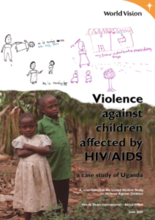
Report documenting participatory research conducted on violence against children affected by HIV/AIDS in Uganda. Particular focus on the stigmatisation and discrimination.
The first situational analysis of children orphaned or made vulnerable by HIV/AIDS in Liberia that provides baseline information for developing national planning processes for OVCs.
Guidance on establishing a national monitoring and evaluation process to track a country’s response to children orphaned and made vulnerable by HIV and AIDS. It includes methods and tools for measurement, and recommends a set of core indicators to record national status and changes.
Practical suggestions for supporting AIDS orphans in child-headed households based on experiences in Uganda. Includes lessons learned and key recommendations.