Displaying 351 - 360 of 415
Emphasizes the social dimensions of psychosocial support interventions, including participatory groupwork and a focus on reducing stigma and discrimination. Argues that psychological interventions such as counseling should never be a first step.
A guide for governments, international organizations and NGO’s for measuring, monitoring and evaluating the national response for children orphaned and made vulnerable by HIV/AIDS.
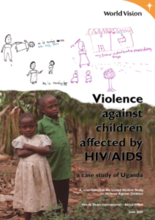
Report documenting participatory research conducted on violence against children affected by HIV/AIDS in Uganda. Particular focus on the stigmatisation and discrimination.
The first situational analysis of children orphaned or made vulnerable by HIV/AIDS in Liberia that provides baseline information for developing national planning processes for OVCs.
Guidance on establishing a national monitoring and evaluation process to track a country’s response to children orphaned and made vulnerable by HIV and AIDS. It includes methods and tools for measurement, and recommends a set of core indicators to record national status and changes.
Practical suggestions for supporting AIDS orphans in child-headed households based on experiences in Uganda. Includes lessons learned and key recommendations.
Description and findings of a pilot survey designed to monitor and evaluate national responses for children orphaned and made vulnerable by HIV/AIDS. Shows that over 99% of all children live in family care.
Brief summary of the role of informal, institutional and child-headed households as a result of the AIDS epidemic. Includes general standards by which to implement good practices in child care.
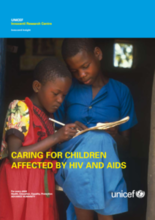
Outlines key findings of survey conducted to investigate the challenges faced by households caring for OVC in South Africa. Conclusion delineates six potential responses to community needs.
Monitoring and Evaluation and Operations Research guidelines for organizations implementing OVC/Children Affected by AIDS programs.