This section includes resources and tools related to alternative care during the COVID-19 pandemic.
Displaying 41 - 50 of 187
This paper asks the questions: What can we learn from the pandemic—and federal, state, and local governmental responses— about the cracks in the child welfare system? What lessons can be carried forward post-pandemic?
โควิด-19 ก่อให้เกิดการหยุดชะงักอย่างไม่เคยปรากฏมาก่อนในระดับโลก รัฐบาลบังคับใช้มาตรการด้านสาธารณสุขในวงกว้าง ซึ่งรวมถึงคำสั่งให้อยู่บ้าน เคอร์ฟิว และข้อจำกัดการเดินทาง มาตรการเหล่านี้มีผลกระทบทั้งทางตรงและทางอ้อมต่อการจัดหาบริการดูแลเด็กในที่พักอา
This briefing paper draws on data and findings from the report: Impact of COVID-19 on Privately Run Residential Care Institutions: Insights and Implications for Advocacy and Awareness Raising.
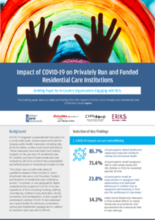
This case study is drawn from the Impact of COVID-19 on Privately Run Residential Care Institutions Study. It presents a summary of the account given by one participant.
This policy analysis examines the impact of COVID-19 policy guidance on the role of workers who provide outreach to transition-age care leavers.
This article describes the steps taken by Udayan Care responded to the needs of children in their care during the COVID-19 pandemic.
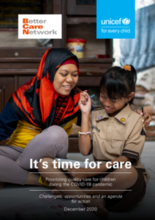
This new discussion paper produced by UNICEF and Better Care Network elaborates on the extraordinary challenges facing children and families across the globe, and the steps that can be taken to ensure their inclusion in COVID-19 recovery plans.
This study examines secondary traumatic stress (STS), burnout and compassion satisfaction (CS) in Flemish foster care workers (FCW) during the COVID-19 lockdown.
This article compares and contrasts two humanitarian emergencies and their impact on Nepal: these are the Nepal earthquake in 2015 and the COVID-19 pandemic in 2020.
This study evaluates the experiences from a case study against aspects such as emergency response to vulnerable populations and other sources from the literature to serve as guidelines for the management of an epidemic in a child and youth care centre (CYCC). To help understand the effects of the epidemic on the centre, this article describes experiences in terms of the meeting of needs.