Displaying 351 - 360 of 506
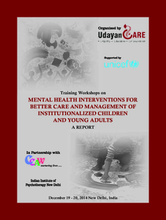
The report from the two-day Training Workshops on “Mental Health and Interventions for Better Care and Management of Institutionalized Children and Young Adults” is now available.
On December 10, 2014, the CPC Learning Network hosted a webinar to discuss the integration of early childhood development and violence prevention.
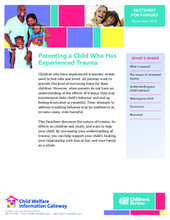
This factsheet discusses the nature of trauma, its effects on children and youth, and ways to help your child.
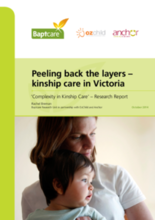
Baptcare, OzChild and Anchor - three organizations that provide kinship care services in Victoria, Australia - commissioned this research to explore the impact that complexity in care arrangements has on children and families in kinship care.
This animated video, made by Dr. Mike Evans, founder of the Health Design Lab at the Li Ka Shing Knowledge Institute, illustrates the impacts of trauma and negative experiences on young children’s brain development and the ways in which healthy cognitive development can be promoted.

This video features a segment of a talk on the effects of care environments on children, hosted by the Christian Alliance for Orphans. The key speakers featured include Dr. Kathryn Whetten & Dr. Charles Nelson, who discuss the Positive Outcomes for Orphans study (POFO) and the Bucharest Early Intervention Project (BEIP), respectively.
In this chapter of the Handbook of Child Well-Being, the authors review the findings from research on the cognitive and social-emotional development of children growing up in institutions, foster care and adoption.
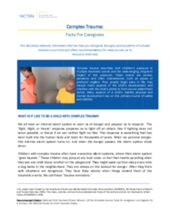
This factsheet from the US National Child Traumatic Stress Network provides useful information to parents and caregivers of children who have experienced complex trauma.
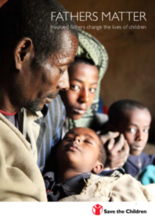
This leaflet is a mapping of Save the children’s role and work in promoting the engagement of fathers. It presents some of the evidence of the benefits of involving fathers and some of the strategies used by the organization and others.
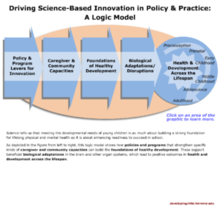
This narrated interactive feature presents a logic model showing how policies and programs that strengthen specific kinds of caregiver and community capacities can build the foundations of healthy development.