Displaying 821 - 830 of 999
This document reports on Udayan Care's international seminar on ‘Improving Standards of Care for Alternative Child and Youth Care: Systems, Policies and Practices’
This report provides a comprehensive and critical analysis of the Indian government’s efforts to rescue and reintegrate children trafficked for their labor.
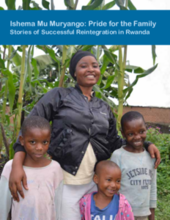
This report highlights stories of some children, youth and families who have been assisted under the Ishema Mu Muryango program. While each of their stories is unique, all highlight some common themes about institutionalization and child abandonment in Rwanda.
The goal of this final evaluation is to build on the mid-term review of a 3-year pilot community project established to address some of the push factors that were leading many children to come to the city of Addis Ababa from Ethiopia’s southern region (SNNPR).
This paper uses findings from interviews with 169 children and young people across 11 local authorities in England and 5 Social Work Practices (SWPs), undertaken as part of a 3-year national matched control evaluation of pilot SWPs, to identify key elements of good quality practitioner relationships with children or young people.
This paper examines international and Australian literature to identify the key areas of support that may help young people to successfully transition from care.
This is a 15 month qualitative study involving semi-structured interviews with families and boys at three stages: preparing for return, in the first three months of reintegration and successfully reintegrated.

Due to the high instances of young people in care becoming homeless after leaving care, this study explored how an intervention could be co-designed to support young people and leaving care workers (LCWs) to share and elicit views about where a young person could live when they leave care.
This series of reports offers important new insights into the economic consequences and issues for youth aging out of care in British Columbia, Canada.
The purpose of this phase 1 report is to document what is known about the resulting educational attainment, economic, social and wellness outcomes for youth aging out of care as compared to the general population in British Columbia, Canada.