
Displaying 361 - 370 of 1810
This country care review includes the care-related Concluding Observations adopted by the Committee on the Rights of the Child.
This country care review includes the care related Concluding Observations adopted by the Committee on the Rights of the Child and the Committee on the Rights of Persons with Disabilities.
This study aimed to identify longitudinal trajectory classes of child protective services (CPS) contact among Alaska Native/American Indian (AN/AI) and non-Native children and examine preconception and prenatal risk factors associated with identified classes.
This article reports on a study of the relationships between child protection system contact and small area-level deprivation in New Zealand. The study found that, compared to children living in the least deprived quintile of small areas, children in the most deprived quintile had, on average, 13 times the rate of substantiation, 18 times the rate of a family group conference, and 6 times their chance of placement in foster care. Findings suggest that action is needed to address the causes of deprivation, provide services that respond to families living in poverty, and undertake further research to examine the interactions between demand and supply of services across deprivation levels.
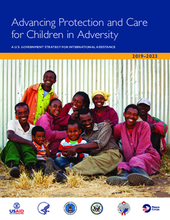
The goal of the Strategy is to ensure the U.S. Government’s investments for the most-vulnerable children and families around the world are comprehensive, coordinated, and effective in helping place partner countries on a Journey to Self-Reliance by which they can sustainably finance, manage, and deliver services that lead to stable, resilient, and prosperous families and communities.
This article examines how the Hague Convention on the Protection of Children and Co‐operation in Respect of Intercountry Adoption (Hague Adoption Convention) plays a central role in justifying the institution of legal adoption.
This paper sets out to explore why formal kinship care has emerged in such a marked way in recent decades by investigating the emergence and development of formal kinship care in two neighboring jurisdictions in Europe where it now accounts for a substantial proportion of all care placements in Scotland and Ireland.
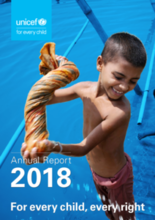
In words, images, facts and figures, this report details the results that UNICEF achieved in 2018, together with its generous partners and supporters, a dedicated global workforce and children and young people themselves.
This paper presents the current vulnerabilities faced by children and the scenario of child protection in India. While discussing the legal provisions prevailing in the country, it sheds light on the socio-cultural barriers that are creating resistance within the society in making the Alternative Care model (and the process of deinstitutionalisation of children) a success. Lastly it suggests viable options that may be helpful for the same.
This article from Marquette Law Review focuses on how children and parents interacting with the child welfare system in the US experience the removal process, the genesis of a foster care case.