
Displaying 531 - 540 of 1810
This paper documents findings from an evaluation of the Live-In Family Enhancement (LIFE) program, and recommends that this approach be expanded for use in prevention as well as reunification.
This practice note is drawn from the discussion and outlines key considerations and a range of measures for local authorities to take as Corporate Parents to ensure consistent and effective implementation of the regulations, now established in law.
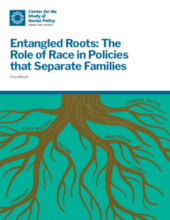
By examining the roots of policies that separate families and their entanglement with racial prejudice and discrimination, this report makes the case that we must embrace an alternative path.
Framed around compelling case studies explaining why children are on the move in Africa, the Americas, Asia, Europe, the Middle East and Oceania, this book explores the jurisprudence and processes used by nations to adjudicate children’s protection claims.
This study evaluates whether the psychometric properties of the Pediatric Symptoms Checklist-17 (PSC-17), a common behavioral health measure typically used as a dichotomous screening tool for mental health needs, support its use as a continuous measure for tracking behavioral health over time.
This paper explores the literature of the existing interventions that are specifically used with American Indian families affected by child abuse and neglect.
This secondary analysis of data describing 1186 maltreated children, drawn from the US National Survey of Child and Adolescent Well-Being II, examined racial disparities in their access to and receipt of needed services and in their caseworkers' case planning and engagement with caregivers.
In this qualitative study with four Child and Youth Care Centers in a town in the Eastern Cape, South Africa, focus groups were held with young people in care and their care workers to discuss preparation for leaving care and aftercare services and the evaluation of these by each group of participants.
This longitudinal study is the first to evaluate the ways in which out-of-home (OOH) caregivers influence permanency outcomes for children in the foster care system while controlling for child-level and parent-level characteristics.
The objective of the present study is to describe the context in which temporary placements are used by children’s services in Quebec (Canada) while analyzing the associative link between temporary placements and physical abuse as the reason for the placement.