
Displaying 331 - 340 of 571
The KidsCount Data Book for 2014 is produced by the Annie E. Casey Foundation. It is the 25th edition of this data book, which measures state trends and demographics in child wellbeing in the United States.
This brief factsheet from the National Center for Injury Prevention and Control presents current data on child maltreatment in the United States.
The Technical Team under the Project “EDU-CARE: Social Operators Active in the Protection of the Children and in the Promotion of the Children’s Rights in Nepal” reports on the child care practices, policies, and programs currently in effect in the country.
This report is based on a synthesis of eight assessments of the implementation of the Guidelines for the Alternative Care of Children (“the Guidelines”) in Benin, Gambia, Kenya, Malawi, Tanzania, Togo, Zambia and Zimbabwe.
Ces outils de collecte de données sont des questionnaires destinés à une enquête auprès de ménages avec des enfants âgés 0 à 17 ans et les adultes du ménage qui s'occupent des enfants.
After the cancellation of the 2013 US National Child Welfare Evaluation Summit, the Children’s Bureau decided to develop short videos as a means of sharing ideas and issues that could not be presented at the conference. The result is the Virtual Summit Series, a group of 17 videos that combine illustration, animation, motion graphics, and content from national experts.
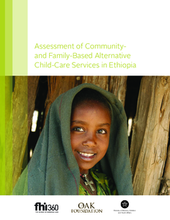
This assessment conducted by FHI 360, with support from Ethiopia's Ministry of Women, Youth and Children Affairs (MoWYCA) and the OAK Foundation aimed to generate evidence about formal community and family- based alternative child care services and service providing agencies in Ethiopia, with a particular focus on magnitude, quality and quality-assurance mechanisms.
A report on the evidence of children’s wellbeing relating economic strengthening programs and the need for expanded monitoring and evaluations.
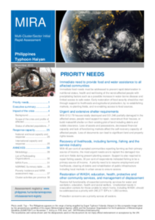
To better understand the impact of Typhoon Haiyan on affected population, more than 40 agencies conducted a multi-cluster initial rapid assessment (MIRA) in 9 provinces covering 92 municipalities and 283 barangays. The (MIRA) confirmed that the impacts of Typhoon Haiyan follow a relatively clear geographical pattern.
This study compares the data on young people transitioning from out of home care from 9 non-communist European countries examined in the INTRAC document with 14 post-communist countries reviewed in the SOS and INTRAC publications.