File
Displaying 21 - 30 of 334
This is a qualitative research study to gather primary data to examine the high demand for foster care services in South Africa and the impact on the country's social work services.
This qualitative exploratory-descriptive study outlines alternative approaches to psychosocial support for Orphans and Vulnerable Children in four municipalities of Vhembe district in Limpopo Province, South Africa, in the form of community-based interventions.
The authors of this exploratory qualitative research study recruited 12 African youths aged between 18 and 23, with at least two years’ experience of life in the care centres of Ekurhuleni Metro Municipality in Gauteng, South Africa, to investigate their experiences when they left these centres during the COVID-19 pandemic.
The long-term consequences of COVID-19 have been tough for children around the world, but even more so for young children already in humanitarian crises, whether due to conflict, natural disasters, or economic and political upheaval. Drawing on research and voices from the Global South, this book showcases innovations to mobilize new funds and reallocate existing resources to protect children during the pandemic.
This study explores the lived experiences of South African grandparents fostering their orphaned teenage grandchildren, revealing significant financial, emotional, psychological, and physical challenges. Despite these difficulties, grandparents demonstrate strong resilience supported by religious, family, and community networks, underscoring the need for standardized screening protocols for prospective foster caregivers.
The Regional Learning Platform on care reform for Eastern and Southern Africa provides an opportunity for government, UNICEF and others involved in care reform
This paper discusses the role of social workers and community volunteers in providing services to foster care children living with HIV in South Africa.
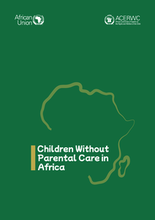
The African Committee of Experts on the Rights and Welfare of the Child (ACERWC/the Committee), in collaboration with African Union Member States, partner organizations, children and young people, launches the first of its kind Continental Study on Children Without Parental Care (CWPC) in Africa. The study, conducted from 2020 to 2022, amid the COVID-19 pandemic, covered over 43 countries in the five regions of Africa.
This webinar introduced new global inter-agency guidance on kinship care. During the webinar, panelists shared key lessons learnt on how to support kinship care, drawing particularly on examples of promising practices from South Africa, Zimbabwe, Liberia, and Brazil.
The objectives of this study were to examine (1) the associations between parental absence for six months or more, adverse childhood experiences (ACEs), mental health problems, and substance use among young adults in sub-Saharan Africa, (2) whether parental absence and other ACEs are independently associated with mental health outcomes and substance use, (3) and if parental absence explains additional variance above and beyond those explained by other ACEs.