Exploring Physical and Psychological Child Well-being Indicators in Mexican Children and Adolescents Placed in Residential Care

Susana Castaños-Cervantes & Jose Anibal Ojeda-Núñez

This study examines the physical and psychological well-being of children and adolescents in residential care facilities in Mexico, addressing a major gap in systematic data. It finds that well-being levels are often below desired standards and that institutional responses only partially meet child protection principles, highlighting the need for improved practices, training, and coordination.

Caregivers’ Perspectives and Experiences on the Transition of Youth with Intellectual Disabilities or Autism Out of Residential Care

Wendy M. Mupaku, Berni Kelly, and Adrian D. van Breda

This paper explores the experiences of informal caregivers in South Africa supporting youth with intellectual disabilities and/or autism as they transition from residential care to adulthood. It finds that caregivers play a vital role but face significant challenges, including inadequate transition planning, limited aftercare services, and insufficient formal support.

File

AI in the family justice system

Nuffield Family Justice Observatory

This briefing is intended to prompt discussion about how the use of artificial intelligence could improve the experiences of families and professionals in the family justice system in the UK. It also outlines the challenges and risks involved, and the governance required for safe usage.

File

Child Protection in Indonesia’s Border Areas: A Qualitative Policy Study from North Central Timor

Yohanes Fritantus and Hendrikus Hironimus Botha

This article examines how child protection policy is implemented at the local level in North Central Timor, highlighting existing legal frameworks, institutional arrangements, and budget allocations. It finds that while regional governments have established regulations and programs, formal child protection policies are lacking at the village level despite some related activities supporting children’s rights.

File

Prevalence, Risk Factors, and Outcomes of Emotional Abuse and Neglect during Childhood in Arab Countries: A Systematic Review and Meta-analysis

Alansari, Amani; Salim, Amani; Elissa, Kawther; et al.

This article presents a meta-analysis of 41 studies examining the prevalence, risk factors, and consequences of emotional abuse and neglect among children in Arab countries, finding that nearly half of children are affected. It highlights key drivers such as parental divorce and low education, as well as serious outcomes like behavioral disorders and suicidal ideation, and calls for culturally tailored prevention and stronger child protection systems.

File

Care-experienced children and the criminal justice system. A systematic review of their perceptions and the professionals who work with them.

N. Softley, P. Turner and C. Lennox

This systematic review synthesised qualitative research on care-experienced children’s pathways into and through the criminal justice system, highlighting how factors such as trauma, a search for belonging, systemic challenges, and intersectionality shape their experiences. The findings underscore the need for trauma-informed approaches, stronger support systems, and reduced unnecessary criminal justice involvement to better respond to the needs of care-experienced children.

File

Psychological Adjustment of Adolescents in Residential Care: A Multi-Informant Analysis of Youth and Caregiver Reports

Ana Simão and Cristina Nunes

This study of adolescents in residential care in Portugal found that perceptions of psychological adjustment differ significantly between adolescents and their caregivers, with adolescents consistently reporting more emotional, behavioral, and peer-related difficulties. The findings highlight low agreement between informants and emphasize the need for multi-informant, developmentally sensitive assessments, greater inclusion of adolescents’ perspectives, and improved caregiver training and tailored mental health support.

File

The UN convention on the rights of the child and child development accounts: Making them work for children in institutions

Anna Mary Coburn

Child Development Accounts (CDAs) are government-funded savings or investment accounts established at birth to support children’s future education, with evidence showing both economic benefits for families and positive psychological effects for children. This article focuses on how to comply with the United Nations Convention on the Rights of the Child, CDA policies must ensure universal access, progressive public funding based on need, and early account establishment, including for children in institutional care to prevent discrimination.

File

Systematic Review of Institutional Mechanisms for Child Protection in India: Roles, Challenges, and Best Practices

Faraaz Subla, Javaid Rashid, and Imran Maqbool Wani

Institutional mechanisms established under India’s Juvenile Justice (Care and Protection of Children) Act and the Integrated Child Protection Scheme play a central role in safeguarding children’s rights through case management, rehabilitation, and coordination. This systematic review of literature (2010–2025) finds that while these systems are essential, they face persistent challenges such as limited resources, inadequate training, and weak monitoring, with improved outcomes linked to community-based and rights-based approaches.

File

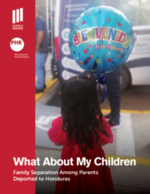
What About My Children: Family Separation Among Parents Deported to Honduras

Physicians for Human Rights and Women's Refugee Commission

Since taking office in 2025, the second Donald Trump administration significantly expanded immigration enforcement while weakening safeguards for due process, family unity, and parental rights, resulting in record detention levels and widespread impacts on immigrant families. This research by Women’s Refugee Commission and Physicians for Human Rights found that many deported parents were denied the opportunity to make arrangements for their children, leading to increased family separations that may become long-term or permanent.

File