Perspectives of youth aging out of foster care on relationship strength and closeness in their support networks
This study incorporated a network approach to understanding how youth discussed strong ties and defined closeness in relationships.
File
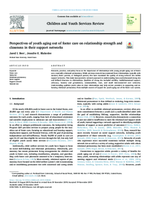
This study incorporated a network approach to understanding how youth discussed strong ties and defined closeness in relationships.
The aim of the present study was to provide an exploratory account of foster carers’ lived experience of ending adolescent foster placements.
This article describes the development of two parenting groups – Nurturing Attachments and Foundations for Attachment, devised to provide much needed support for foster, residential and kinship carers and adopters parenting children and young people of all ages. Both programmes are informed by the Dyadic Developmental Psychotherapy (DDP) model.
This is a qualitative study aimed to explore the need for preparing children ageing out of foster care for independent living in South Africa.
This article presents a critical review of research into post-adoption support in educational settings using a rigorous systematic methodology.
This chapter from the book Modern Day Slavery and Orphanage Tourism draws on the author's film The Voluntourist that has aided in raising the groundswell of objection to orphanage tourism.
This chapter from the book Modern Day Slavery and Orphanage Tourism responds to the question of how sending countries (of people, money and resources) contribute to the institutionalization of children in receiving countries.
This chapter from the book Modern Day Slavery and Orphanage Tourism highlights promising practice which aims to prevent and reduce the institutionalization of children at two levels: (1) systems and social work strengthening, and (2) family strengthening and gatekeeping.
This chapter from the book Modern Day Slavery and Orphanage Tourism aims to identify the motivations behind voluntourism, categorizing them into types so as to provide a foundation upon which we might better assess why it is that so many voluntourists seek to work with children, often in institutional environments.