
Uganda National Child Policy Implementation Plan 2020/21 - 2024/25
This National Child Policy Implementation Plan (2020/2021-2024/2025) provides a roadmap and a common agenda of action to operationalise the National Child Policy (2020).
File
This National Child Policy Implementation Plan (2020/2021-2024/2025) provides a roadmap and a common agenda of action to operationalise the National Child Policy (2020).
This National Child Policy has been developed to coordinate the efforts of the different sectors that have a direct and indirect mandate on children and deliver a comprehensive package of services encompassing all the four cardinal rights of the child in a multi-sectoral approach.
In this session of the Advocacy Sector Conversations Forum, Barbara Carter and Kate Fitt discussed issues around child protection and provided some practical tips on how to support parents with disability in their dealings with child protection agencies.
This article describes David Tobis's keynote address at the Family Inclusion Network South East Queensland’s Global Day of Parents Forum and the story of the parents and allies who changed the child protection system in New York City.
The resources on this page address ways to advocate for families in the U.S. and include State and local examples.
This article discusses the results of the first Scottish survey of parents’ experiences of child protection.
This booklet on aftercare is part of a Series on Alternative Care covering the latest legal and policy framework on Alternative Care in India, which has been presented in an easy-to-understand style so that they can be used as an effective reference material by all stakeholders.
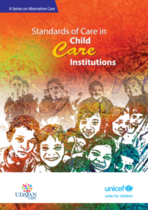
This booklet on standards of care in child care institutions is part of a Series on Alternative Care covering the latest legal and policy framework on Alternative Care in India, which has been presented in an easy-to-understand style so that they can be used as an effective reference material by all the stakeholders.
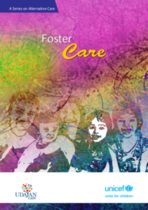
This booklet covers the latest legal and policy framework on Foster Care in India, which has been presented in an easy-to-understand style so that it can be used as an effective reference material by all stakeholders.
This Virtual Companion Tool Kit for child protection committees at the village (VCPCs) is a knowledge kit aimed at strengthening community-led child protection mechanisms.
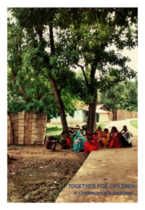
In 2014, Leher partnered with Sarvo Prayas Sansthan (SPS) to develop and implement a community based preventive child protection initiative in the district of Madhubani in Bihar, India. This report presents the learning from that initiative.
All over the world, the pandemic has turned children's lives upside down. In this episode of Save the Children Documentary, they share their stories.
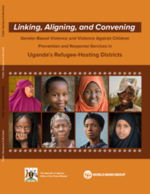
The Development Response to Displacement Impacts Project (DRDIP) analysis includes a comprehensive mapping of services for GBV and VAC prevention and response across the key sectors of health, police, justice, and social services in refugee settlements and host communities.
This article explores changes in policy and practice in children’s services in the UK over the past 40 years and discusses the thinking that has underpinned them.

In this article, the authors highlight a framework distinguishing experiences of trauma from experiences of deprivation and use the examples of posttraumatic stress disorder and reactive attachment disorder to demonstrate how greater specificity in our understanding of early adverse caregiving can lead to more accurate and targeted diagnosis and treatment for young children.
This article documents the author's experiences with the state’s contemporary removal of Aboriginal children in Western Australia (WA) and the practice of Aboriginal Family Led Decision Making (AFLDM), a family led decision making process supported as best practice for Aboriginal families.
The authors of this study applied fuzzy-set qualitative comparative analysis (QCA), based on 119 interviews, to identify the combinations of case management attributes that led to (1) increased knowledge of HIV status, and (2) high percentages of beneficiaries with known HIV status participating in a program that serves orphans and vulnerable children affected by HIV and their families in Mozambique.
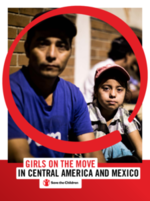
The primary purpose of this report is to recommend evidencebased strategies to improve the relevance and effectiveness of field interventions that target development outcomes for girls on the move in Central America and Mexico.
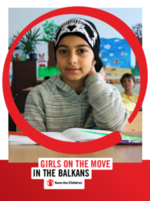
This report from Save the Children presents a qualitative study with the participation of girls and young women who are in transit or have migrated to Greece, Serbia and Bosnia and Herzegovina.
This report consolidates findings from a rapid participatory consultation with: (1) migrant girls in the Northeastern Colombia border region, (2) front-line practitioners providing services to migrant children and their families, and (3) Save the Children teams in Colombia.
This report’s primary purpose is to recommend evidence-based strategies to improve the relevance and effectiveness of field interventions that target development outcomes for migrant girls in Southern Africa.

The Girls on the Move Initiative is a global series of action research that puts girls at the centre. It has been conducted across different regions within existing Save the Children programmes. Each regional study generates targeted evidence to address knowledge gaps in current literature and programme approaches, and engages Save the Children teams to immediately strengthen ongoing interventions for girls in different stages of migration, notably during transit and arrival.
For this study, researchers conducted semi-structured retrospective telephone interviews with foster parents across one southeastern U.S. state to identify local retrospective perspectives on Reasonable and Prudent Parenting Standard (RPPS) implementation.
The authors of this study applied a sector‐wide analysis protocol that harmonized components of the Humanitarian Programme Cycle by the Inter‐Agency Standing Committee and of a framework to characterize the governance of early childhood development and education (ECDE) systems.
This study examines a sample of 1705 cases of unaccompanied and separated children (UASCs) included in a pilot project for early recovery child protection intervention.