Matching in Foster Care Systematic Review
A systematic review exploring the lived experience of matching children with foster families and examining the evidence on the outcomes of matching decisions.
File
A systematic review exploring the lived experience of matching children with foster families and examining the evidence on the outcomes of matching decisions.
The State of the World’s Children 2021 calls for commitment, communication and action to promote good mental health for every child, protect vulnerable children and care for children facing the greatest challenges.
This report presents the very first quantitative analysis of the risk of sexual violence against children in conflict for the period 1990-2019.
This study aims to answer two research questions: a) How do youth and staff/professionals define/conceptualize authentic youth engagement (AYE)? and b) What are youths’ and staff/professionals’ recommended strategies for authentically engaging youth? Thirty stakeholder interviews (15 youth, 15 staff/professionals) and 81 surveys (46 youth, 35 staff/professionals) were completed.
This bulletin provides information for child welfare professionals about the importance of permanency for youth and strategies for achieving it. Permanency efforts for youth should include both legal permanency (e.g., reunification, adoption, kinship care) and relational permanency (i.e., a relationship or connection with a caring adult, such as a relative, neighbor, service provider, teacher, or other important person in the youth's life). These adults may provide lifelong support that can help youth transition to adulthood and may even become a legal permanent option for the youth.
This report provides key recommendations from three roundtable discussions about how to support permanency with kin, relational permanency, and successful older youth adoption.
Most children involved with the child welfare system are not separated from their families but instead receive services while living at home. This issue brief explores effective in-home services that are being used to promote safety and help keep children and families together, as well as practical considerations for their implementation. It then presents promising practices used by States and jurisdictions that are working to improve their delivery of in-home services.
This episode focuses on the current reality of reunification across the public child welfare system. Listeners will hear a conversation among child welfare professionals, members of the American Bar Association (ABA) Center on Children and the Law(opens in new window), the Children’s Bureau, and an alumnus of foster care.
The purpose of this study is to determine the association of face-to-face contact with biological parents and externalized behaviors, while taking into account placement instability and foster parent interactive sensitivity.
The purpose of this study is to determine the association of face-to-face contact with biological parents and externalized behaviors, while taking into account placement instability and foster parent interactive sensitivity.
This policy brief draws on the substantial evidence on the health, educational, and economic benefits of family-friendly policies to recommend four transformative shifts in workplaces.

This is the 3rd and final presentation in the Kinship Care in Brazil mini-series. Here, Claudia Cabral of Associação Brasileira Terra dos Homens describes the importance of considering the extended family when making decisions about children’s care, and efforts to advocate to the Brazilian government.
This is the 2nd presentation in the Kinship Care in Brazil mini-series. Here, Jonathan Hannay of ACER Brazil, shares learning from a programme of formal therapeutics kinship care that draws upon the Breaking the Cycle approach. Correction: The number stated at 17:02 should be 4, not 17.
This is the 1st presentation in our Kinship Care in Brazil mini-series. Here, Ana Angélica Campelo of Brazil’s Ministry of Citizenship, shares an overview of the social welfare system in Brazil and how kinship care fits within it.
Adolescents living in residential youth care (RYC) are at risk for disadvantaged social relationships, which in turn present a risk factor for increased loneliness. Social relationships of Slovenian adolescents aged 15–18 years and living in RYC group homes or in their primary families were investigated by relying on the social convoy framework.
This guidance note aims to address the migration data gaps in a manner relevant to all stakeholders, and promotes a whole-of-society approach. It is also meant to help operationalize IOM’s Migration Data Strategy and includes recommendations on enhancing gender indicators and gender-based methods in data production, protection, dissemination and use. The note provides succinct information on the extent to which gender is captured through macrolevel global data sets, along with a discussion of key issues relevant to gender and migration data.
Age plays a critical role in a child’s migration, but how will gender mediate that experience? Which gender-specific vulnerabilities, needs, and opportunities influence the lives of girls and boys on the move? This report reviews the existing evidence base – official statistics and quantitative and qualitative studies from the community level to the global level – to shed light on these important questions.
The purpose of Policies and Practice: A Guide to Gender-Responsive Implementation of the GCM is to provide clear, concrete and practical guidance to governments and other key stakeholders on gender-responsive implementation of the Global Compact for Safe, Orderly and Regular Migration (GCM). Building on the gender-responsive approach outlined in the guiding principles of the GCM, this guide prioritizes the specific needs, challenges and vulnerable situations of women, girls and gender non-conforming people at all stages of migration due to their increased vulnerabilities to human rights violations and gender-based discrimination. It takes into consideration the multiple and intersecting forms of discrimination they may face while highlighting the positive contributions that they make in countries of origin, transit, and destination.
Scopul analizei de situație a copiilor din Republica Moldova, cu accent pe copiii
vulnerabili și prevenirea separării de părinți, este de a oferi o imagine completă a
situației lor actuale, inclusiv în urma efectelor pandemiei COVID-19 și care să servească
elaborării de recomandări concrete cu privire la o serie de decizii bazate pe probe, pe
care statul dar și actorii societății civile au nevoie să le ia și, ulterior, să le implementeze,
pentru a îmbunătăți situația grupurilor celor mai vulnerabile, precum și pentru a
eficientiza sistemul de îngrijire alternativă a copilului din Republica Moldova.
Analiza actelor normative de reglementare a serviciilor sociale şi a finanțării acestora a fost realizată cu scopul de a elabora recomandări practice privind îmbunătățirea cadrului normativ și a mecanismului de finanțare a serviciilor sociale de prevenire a separării copilului de familie și a celor de îngrijire alternativă.
În 2021, Changing the Way We Care a lansat o analiză situațională a sistemului de îngrijire a copilului în Republica Moldova. Rezultatul acestei analize sunt 8 rapoarte bazate pe cercetări ample ale partenerilor CTWWC: Copil, Comunitate, Familie (CCF) Moldova, Keystone Human Services International, Moldova și Parteneriate pentru fiecare copil (P4EC). Aceste rapoarte oferă o imagine de ansamblu a situației copiilor vulnerabili și a familiilor acestora din Moldova, atât în contextul dezinstituționalizării, cât și al prevenirii plasării în instituții rezidențiale.
Scopul evaluării individuale a 184 de copii din șase instituții rezidențiale este de a obțineinformația actualizată privind indicatorii demografici și situația socială, educațională,psihologică și medicală a copiilor plasați în instituțiile rezidențiale pentru a planificareintegrarea lor în mediu familial și/sau pregătirea pentru tranziție de la servicii deîngrijire de tip rezidențial la îngrijire de tip familial.
Scopul studiului este de a identifica o serie de informații relevante cu privire la factorii
de succes și cei de risc în procesul de reintegrare familială, necesare pentru a formula
recomandări care să contribuie la decizii bazate pe probe în îmbunătățirea acestui
proces, prin prisma inițiativei CTWWC.
Scopul studiului este de a elabora o serie de recomandări practice concrete pentru
schimbarea cunoștințelor, atitudinilor și practicilor grupurilor țintă incluse în cercetare în
vederea eliminării barierelor existente în procesul de reintegrare a copiilor
dezinstituționalizați și a prevenirii separării de părinți a copiilor din familii vulnerabile prin
evaluarea și analiza nivelului de cunoștințe, atitudini și practici în domeniul reintegrării
familiale a copiilor separați și prevenirii riscurilor de separare.
Obiectivele revizuirii MC sunt de a aduce MC în conformitate cu cele mai recente dezvoltări legislative și metodologice, cu bunele practici globale și a spori calitatea prestării serviciilor, inclusiv a consolida participarea activă a copiilor și familiilor în proces.
Scopul studiului este de a cunoaște situația actuală a serviciilor sociale axate pe
consolidarea capacității familiei de a asigura un mediu sigur, stabil și afectuos pentru
copii, precum și a serviciilor destinate copiilor care au nevoie de sau se află în îngrijire
alternativă și în proces de reintegrare, pentru a putea formula recomandări care să
contribuie la decizii bazate pe evidențe în îmbunătățirea acestora.
Scopul evaluării sistemului de formare profesională inițială și continuă a personalului din
domeniul protecției copilului și familiei din Republica Moldova este de a contribui la
consolidarea acestuia în baza celor recente dezvoltări programatice, legislative și
metodologice la nivel național și internațional, cât și să contribuie efectiv la sporirea
calității prestării serviciilor pentru copiii și familiile vulnerabile prin creșetrea
competențelor profesioniștilor din sistem.
The purpose of this Standard Operating Procedure (SOP) is to provide a standard and consistent approach to case conferencing as part of a comprehensive case management approach utilized during decision-making processes for children. The SOPs should be utilized by institutions (e.g. Charitable Children’s Institutions, or CCIs) and organizations as well as other actors engaged in decision-making around children’s care and protection.
Launched on October 1, 2018, the CTWWC initiative is organized around three main strategic objectives: (1) Governments promote family care; (2) Children stay in or return to safe and nurturing families; and (3) Key stakeholders make meaningful commitments toward family care. The second year of the initiative is summarized in this report of progress.
The analysis presented in this report looks at historical trends in child marriage, with a focus on selected countries that have recorded significant declines in child marriage prevalence. It offers an overview of changes in the practice together with a review of other shifts that have occurred in these countries in terms of girls’ access to education and employment opportunities, as well as economic development and poverty reduction.
Left-behind children (LBC) are a social and educational concern in China. Researchers have identified psychological and behavioural effects on LBC. This study creates a profile of LBC in rural Sichuan and identifies life and values education (LVE) as a beneficial intervention.
Lumos worked together with partners on the family-based care for unaccompanied children project between 2018 and 2020, in four camps in the Tigray region of Ethiopia. This evaluation report considers the various components of the project and provides recommendations to child protection and refugee response practitioners, with the aim of improving the quality of child protection programming and its impact on unaccompanied children in refugee contexts.
The child welfare system was created to care for abused and neglected children. But too often, teenagers are landing in the system because they simply aren’t getting along with their parents. This paper traces Casey’s efforts to learn from communities that are preventing teens from landing in the system by helping families while the teen remains at home. A survey of the states, interviews with experts, secondary research and visits to several communities show common elements of successful programs.The paper presents information on related laws and policies, funding sources and programs for families while including the infrastructure and services needed to support such initiatives.
These presentations from Know-How Center Bulgaria, Children and Family Initiative, and Changing the Way We Care, were delivered during the September 30, 2021, workshop of the Care Measurement Task Force of the Transforming Children's Care Global Collaborative Platform. The focus of the workshop was translating research evidence into action.
These presentations from Hope and Homes for Children, Miracle Foundation and Railway Children were delivered during the August 20, 2021, workshop of the Care Measurement Task Force of the Transforming Children's Care Global Collaborative Platform. The focus of the workshop was child and family outcome measurement.
These presentations from UNICEF and Alternative Care Thailand were delivered during the July 9, 2021, workshop of the Care Measurement Task Force of the Transforming Children's Care Global Collaborative Platform. The focus of the workshop was on care measurement initiatives in Eastern and Southern Africa and Thailand.
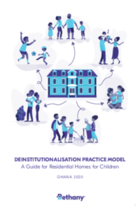
The aim of this deinstitutionalisation (DI) model is to give guidance and a clear, practical approach for deinstitutionalisation for Residential Homes for Children (RHC) in Ghana.
These presentations from UNICEF and Eurochild were delivered during the June 25 2021 workshop of the Care Measurement Task Force. The focus of the workshop was the development of the residential care toolkit (led by UNICEF) and care measurement in the EU region.
The book aims to help children stay hopeful and positive during the COVID-19 pandemic. The story is a sequel to ‘My Hero is You: how kids can fight COVID-19!’, published in April 2020.
Both books have been released by a collaboration of 60 organizations working in the humanitarian sector, including the World Health Organization, UNICEF, the United Nations High Commissioner for Refugees, the International Federation of Red Cross and Red Crescent Societies and the MHPSS Collaborative for Children & Families in Adversity.
Engaging families in the casework process promotes the safety, permanency, and well-being of children and families in the child welfare system and is central to successful practice. Effective family engagement occurs when child welfare practitioners actively collaborate and partner with the family network, including maternal and paternal relatives and fictive kin, throughout their involvement with the child welfare system and recognizing them as the experts on their respective situations. This bulletin for professionals provides an overview of the foundational elements of the family engagement approach, followed by strategies and promising practices for implementing it.
la Comisión Interamericana presenta la guía ¿Cómo hacer más
efectiva la protección a la unidad familiar y reunificar a la familia en los procedimientos migratorios y de protección en contexto de pandemia? en la que
se analizan los estándares interamericanos aplicables a la luz de las obligaciones
internacionales de los Estados y propone recomendaciones para garantizar la unidad
familiar y la reunificación familiar así como prevenir los riesgos de separación y minimizar los impactos en los casos de separación familiar. Asimismo, la implementación
de las garantías de la reunificación familiar requiere muchas veces de una estrategia idónea de acceso a mecanismos de regularización documental, así como de condiciones seguras de viaje y movilidad a través de las fronteras nacionales. Esto es especialmente benéfico para familias que se han visto separadas de manera forzada o por
razones asociadas a la movilidad humana.
he Inter-American Commission on Human Rights (IACHR) has issued, in collaboration with the UN Refugee Agency (UNHCR), a practical guide on how to protect family unity and reunification more effectively in human mobility and mixed movement contexts during the ongoing COVID-19 pandemic. This publication is part of a series of guides issued by the IACHR to address the impact of the pandemic on human rights. The guide makes recommendations to States, so they may protect family unity, prevent separation, and take any necessary measures to ensure the reunification of families who may have been separated in contexts associated with human mobility.
Because most COVID-19 deaths occur among adults, not children, attention has been focused, understandably, on adults. However, a tragic consequence of high numbers of adult deaths is that high numbers of children might lose their parents and caregivers to COVID-19, as occurred during the HIV/AIDS, Ebola, and 1918 influenza epidemics. The goal of this report is to shine a bright light on this urgent and overlooked consequence that is harmful for children.