An Introduction to Foster Care
This chapter of Foster Care and Best Interests of the Child provides an overview of the foster care system in the United States.
This chapter of Foster Care and Best Interests of the Child provides an overview of the foster care system in the United States.
This chapter of Foster Care and Best Interests of the Child provides a template for evaluating and reforming the U.S. foster care system to prioritize the best interests of children.
In this chapter of Foster Care and Best Interests of the Child, the authors describe the history of legislative and judicial efforts to reform the foster care system.
This chapter of Foster Care and Best Interests of the Child first describes how foster care, intended as a temporary but necessary solution for children who cannot safely remain at home, is increasingly described as a problem in and of itself rather than as a solution to a difficult problem.
This volume provides an in-depth examination of the history and goals of the foster care system in the US, how and why it fails to adequately meet children’s needs, and what it would take to actualize meaningful improvements in children’s experiences and outcomes.
This chapter provides a review and analysis of the “best interests of the child” standard in foster care policy and practice.
The authors of this study used a retrospective cohort design with linked administrative data on 296,422 children to examine the relationship between school absenteeism and child protection system (CPS) involvement.
This survey of the statutory provisions and case law of all 50 states [of the USA] and the District of Columbia includes the rights of children to parental support, inheritance, and familial association remaining upon termination of parental rights.
This qualitative study explores the experiences of unaccompanied children with regard to violence in reception facilities in the Netherlands from the perspective of the children.
This document outlines Save the Children South Africa’s strategic ambitions for the period 2015 to 2020.
This study zeroes in on the issue of left-behind children and draws on data from the China Family Panel Studies surveys to examine the impacts of parental absence on child development in psychological, physical and cognitive domains.
This paper brings new understanding about the way in which child neglect is identified by school staff in Wales.
The current study examines the Mid-Adolescent Neglect Scale (MANS), a 45-item youth, self-reported measure of neglect.
Drawing on qualitative research undertaken with adolescents with disabilities from refugee and host communities in Jordan and the State of Palestine, this article critically interrogates the framing of child neglect, which to date has situated the state as a protector rather than a perpetrator, the narrow understanding of adolescent needs and the responsibility of international actors for ensuring that the full range of human rights of adolescents with disabilities is supported.
This study investigated the experiences and perception of parental neglect among independent child migrants (ICM) in Ghana and the relationship between these experiences and the children’s subjective well-being (happiness).
This study was conducted to address some of the gaps in the current literature by identifying, in a more comprehensive manner, family profiles and service referrals in cases of child neglect investigated and substantiated by Child Protection Services (CPS).
Reflecting upon research on child neglect, this article focuses on the importance (or lack thereof) given to the views of families in neglect situation within this field.
Social practice theory (SPT) was used as a theoretical and analytical framework in a study which investigated ‘successful’ professional practices when working with parents with learning difficulties where there are concerns about child neglect.
There is no uniform definition of supervisory neglect and this creates challenges for measurement and identifying caregivers at risk. In this article definitional and measurement issues are discussed, as well as challenges in conceptualizing prevention.
Following the 6th Conference of the International Society for Child Indicators (Montreal, 2017), this Special Issue of Child Indicators Research was compiled to advance an interdisciplinary understanding of the complexity of conceptualizations, determinants, consequences, and measurement of child neglect around the world and to highlight the need for reforms in child protection systems.
This paper introduces the special issue of the Child Indicators Research journal focused on child neglect.
This comment piece by Charles H Zeanah and Kathryn L Humphreys accompanies a study on the number of children in institutional care around the globe, entitled 'Prevalence and number of children living in institutional care: global, regional, and country estimates,' published in the Lancet in March 2020.
This paper contributes to the growing body of work which argues that residential child care is a positive choice and that it has a key role to play in positive identity formation.
This study presents the results of research carried out on adolescents and emerging adults adopted both in Italy and in Argentina. The main aim is to investigate the role and the associations of satisfaction with life, self-concept clarity, and parental attachment on educational identity.
The purpose of this study is to (a) identify whether there are meaningful subgroups of families with distinct post-adoption needs and (b) determine which parent, youth, and adoption characteristics are associated with these collections of needs.
This article explores contemporary Muslim Americans’ negotiations of Islamic law to find ethical ways to care for non-biological children within their household.
The general objective of this study is to assess the response strategies of NGOs in meeting the needs of vulnerable children in vulnerable households in selected communities of Nasarawa Eggon LGA of Nasarawa state, Nigeria.
The present study aimed to study the aggression and internalizing behavioural problems among orphan and non-orphan children in Kashmir.
This scoping review adopts a descriptive focus to compile and analyze those studies published between 2007 and 2017 that have assessed the impact of situations of vulnerability or institutionalization on linguistic and communicative development.
This article presents findings and recommendations from the first year of a two-year evaluation of the Local Interagency Network for Children and Family Services (LINCS) program, a part of the Shasta County Department of Social Services in northern California.
This report presents the results of an evaluation of the Partnering for Family Success (PFS) program, which was conceived as an innovative intervention to address the particular needs of housing unstable families who had a child in the custody of the county child welfare agency.
This study examines the effects of child welfare, mental health, and drug/alcohol system experiences on jail involvement, as mediated by juvenile justice placement, for Black and White youth/young adults.
The purpose of this study was to examine associations between child protection involvement and 3rd- and 5th-grade reading and numeracy attainment, while controlling multiple other adversities.
This article provides recommendations for adapting the pediatric medical home (PMH) model for health care needs of youth in foster care.
This article tracks the history of foster care licensing requirements in the U.S. state of Minnesota, discusses the real-life story of a grandmother with a grandchild placed in foster care, explains the federal mandates established through the Adam Walsh Act, discusses the existing flaws in the process, and highlights the ways in which Minnesota’s current statutory scheme and processes disproportionally impact communities of color.
The aim of this study was to assess the evidence of the effectiveness and cost-effectiveness of Intensive Family Preservation Services (IFPS) in reducing the need for children to enter out-of-home care.
The purpose of this study was to address the gap in the literature on the full spectrum of posttraumatic stress disorder (PTSD) attributes and symptoms for children living in nonkinship foster homes versus kinship foster homes, as well as examine the benefits and limitations of children placed in kinship and nonkinship foster homes.
The authors of this study introduce a new construct, birth family thoughts, that captures a sense of curiosity about birth family for adopted individuals, and describe the development of an accompanying brief self-report measure, the Birth Family Thoughts Scale (BFTS).
This report presents results from a survey administered to graduates of the Child Protection in Emergencies Professional Development Programme (CPiE PDP) in the Middle East and Eastern Europe region to evaluate if and how the CPiE PDP has influenced their professional development and to what extent the graduates have practiced what they have learned.

The primary aim of this chapter is to outline the significance of trauma in the lives of parents involved in the child protection system who are sent for forensic psychological evaluations.
This report is the second in a series of reports exploring the economic consequences and issues for youth aging out of care in British Columbia, Canada. The purpose of this second phase report is to describe and, to the extent possible, provide estimates of the magnitude of these costs.
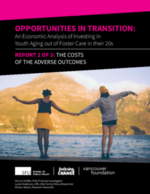
This series of reports offers important new insights into the economic consequences and issues for youth aging out of care in British Columbia, Canada.
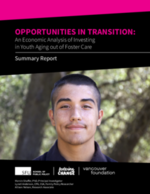
This report is the third and final in a series of reports exploring the economic consequences and issues for youth aging out of care in British Columbia, Canada. The purpose of the report is to estimate the incremental costs of support measures that can improve outcomes and to compare these costs to the benefits they may generate.
This briefing gives a very broad overview of the legislative framework for child protection in England.
This document outlines the partnership between the Victorian Government, Victorian Aboriginal communities and the child and family services sector.
This case study seeks to summarise the policy priorities of the four UK nations for care leavers, review outcomes for which data is publicly available, and discuss a number of areas where policy differences can be identified.
The following evaluation looks at a dialectical behavioural therapy (DBT) skills group implemented with young females in a Scottish residential service.
This paper invites the reader to imagine residential child and youth care as having a central connection to experiential nature-based therapies across rural and urban settings.
In Australia, the emerging model of child welfare policy and practice emphasises 'permanency and lifelong connections with birth families'.
This article presents the findings of the qualitative study on the personal change of foster parents carried out in Lithuania, which reveals the subjective experience of informal learning of the foster parents fostering a non-relative child.