Displaying 1021 - 1030 of 1116
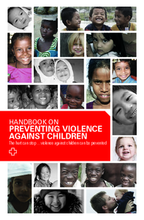
The Canadian Red Cross has produced a handbook on the prevention of violence against children. The handbook includes specific guidance on preventing violence against vulnerable children, such as children in institutions, children involved in armed conflict and children with disabilities.
Child friendly leaflet explaining child abuse, the responsibilities of adults, and who to contact with any concerns.
Explores the negative impacts of loss of parental care on children. Advocates for reform for children based on assertion that failure to keep children in families, out of residential institutions and off the streets, will be another barrier to the achievement of the Millennium Development Goals
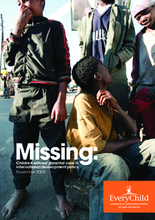
This document outlines EveryChild’s approach to the growing problem of children without parental care by defining key concepts, analysing the nature and extent of the problem, exploring factors which place children at risk of losing parental care, and examining the impact of a loss of parental care on children’s rights.
Joint statement among UN agencies and NGO partners to build greater consensus on the importance of child-sensitive social protection.
Keys findings from the full investigation into state-run children's institutions in Ireland from the 1930s - 1990s
This study aims to use media reports as a resource to collate existing information on abandoned babies and to draw conclusions to inform future response.
UNODC published Guidelines to implement family skills training programmes for drug abuse prevention in March 2009. These guidelines contain evidence of effectiveness, principles of family skills training programmes, cultural adaptation guidelines, advice on how to recruit and retain families through the programmes, practical advice on training of staff, as well as information about monitoring and evaluating family skills training programmes.
Focuses on children’s vulnerabilities and risks related to an absence of protection from violence, abuse and neglect, and the ways in which measures to address such vulnerabilities and risks can be more effectively integrated into social protection policy frameworks in the West and Central Africa region.
This paper outlines a vision for the network of services, policies, and programmes necessary to protect children at risk and enable them to reach their full potential, free from violence, exploitation, and abuse.