Displaying 711 - 720 of 1116
This collection of annexes accompanies the publication entitled ‘Definition and a guide for practitioners, local leaders and decision makers working to protect children from child sexual exploitation.’
Bringing together cross-disciplinary expertise, this volume addresses a vast range of topics related to child abuse and neglect in Uganda.
This guideline aims to provide evidence-based recommendations for quality clinical care for children and adolescents who have, or may have, been subjected to sexual abuse, in order to mitigate the negative health consequences and improve their well-being.
This edited collection explores the background and implementation of the Nordic Barnahus (or 'Children's House') model – recognised as one of the most important reforms related to children who are the victims of crime in the Nordic region.
The main objectives of this study were to establish the prevalence of female genital mutilation/cutting (FGM/C) and child marriage among five ethnic communities in the following six study locations: Garissa (Balambala); Wajir South (Habaswein); Kajiado Central; Marsabit (Laisamis); Samburu (Wamba); and West Pokot (Sook).
This publication from the Child Welfare Information Gateway presents an overview of US state laws that designate the officials and entities that may have access to the confidential records of child abuse and neglect reports and investigations, the circumstances under which information may be disclosed, and the appropriate use of confidential information.
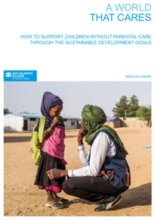
This briefing describes how the needs of children without parental care can be addressed through five of the SDGs: no poverty (1); quality education (4); decent work and economic growth (8); reduced inequalities (10); and peace, justice and strong institutions (16).
This paper, produced for the Know Violence global learning initiative, looks at the violence children experience in closed institutions in the Central Asian countries, specifically the former Soviet republics: Kazakhstan, Kyrgyzstan, Tajikistan and Uzbekistan.
This briefing paper is for social workers. It brings together key messages from research on child sexual exploitation with implications for practice and should be read in conjunction with guidance for professionals.