Displaying 701 - 710 of 1116
This systematic review addresses violence and abuse experiences in institutionalised care, including frequency and type of abuse/violence, interventions addressing violence in institutional care, the perpetrators of violence, and the connections between abuse and cognitive delays in institutionalised children.
This editorial explores the experience and impact of childhood violence around the world and calls for a coordinated and multi-sectoral response to prevent violence, recognizing the need to identify and address the root causes of family separation and institutionalization.
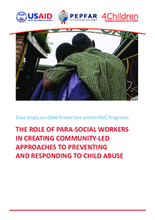
The following case study outlines the process undertaken by officials, para-social workers (PSWs) and community leaders in several sub-counties in Kasese District in Western Uganda to a) identify and address instances of child abuse in their communities, b) track cases of abuse and encourage reporting by victims, and c) support a para-social workforce in the communities to act as a deterrent and reduce the incidence of abuse.
This review aims to identify features that adolescents experiencing neglect and/ or emotional maltreatment report.
The study investigated the life of children in the street in post-war South Sudan. A main objective was to examine whether children who slept in the streets although they had parents they could go home to had been victimised more from domestic violence than children working in the street by day but spending the nights at home.
This paper describes promising programs and strategies designed to prevent physical punishment by parents for each of three levels of intervention − indicated, selective, and universal − and summarizes the existing evidence base of each.
This collection of annexes accompanies the publication entitled ‘Definition and a guide for practitioners, local leaders and decision makers working to protect children from child sexual exploitation.’
The purpose of this study was to estimate the lifetime prevalence of official investigations for child maltreatment among children in the United States.
This report presents and reviews 43 interventions addressing household violence within the context of humanitarian emergencies, including a range of programs focused on parenting education and support and economic strengthening.

The advice presented in this report is non-statutory, and has been produced to help practitioners, local leaders and decision makers who work with children and families to identify child sexual exploitation and take appropriate action in response.