Displaying 241 - 250 of 285
A template for assessing the suitability of kinship caregivers in the longer term, and for planning the care of a child in kinship care.
Guidelines for when and how to make a decision regarding the best interests of the child in the case of emergencies. Includes useful information for addressing unaccompanied and separated children including, temporary and alternative care arrangements, tracing and reunification, and child participation.
This article examines the foster care of Aboriginal children in Australia. It discusses the Aboriginal Child Placement Principle (ACPP), the role of indigenous kinship care and the self-determination of Aboriginal people.
A set of questions for parents/caregivers to complete on the child’s health, development, and behavior. Can be used as part of an assessment or to prepare caregivers.
An evaluation of a programme in Sri Lanka that aimed to resettle and reintegrate children affected by armed conflict, prevent and respond to child abuse, and develop community based alternatives to institutional care.
Examines the transition from residential care to family-based, community care models in five European / Eurasian countries.

Save the Children's "First Resort" series focuses on the needs and rights of children who, for a wide variety of reasons, are lacking adequate parental care. This third paper in the First Resort series presents practical examples of the range of options available to policy-makers, practitioners and others with responsibilities for the care and protection of children without adequate parental care.
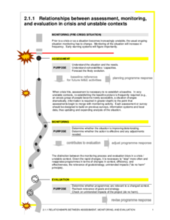
One-page flow-chart diagram outlining the purpose of and relationship between assessment, monitoring, and evaluation processes.
A situational analysis of policy and care surrounding children affected by HIV/AIDS in Lesotho. Includes a comprehensive, practice-oriented discussion of alternatives to residential care, placement procedures and standards of residential care.
A brief fact sheet on family reintegration. Provides an overview of what a social worker should pay attention to when assessing a child's situation.