
Displaying 1361 - 1370 of 1807
On May 2, 2012, in preparation of the Family Strengthening and Alternative Care Conference for Francophone Sub-Saharan Africa in Dakar, Senegal, BCN and the regional planning committee convened experts and practitioners to present and discuss the efforts to implement the Guidelines for the Alternative Care in the region. Watch this video for presentations, country level experience from Togo, and discussions on the pressing issues facing implementation in the region.
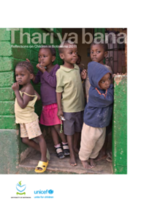
Collection of research and reflections on children’s issues in Botswana articles in the various chapters of the publication have been structured to follow the life cycle of the child as she or he grows and is faced with different issues that need to be addressed: young child survival; child development; child protection; HIV and AIDS; and child-sensitive social protection.
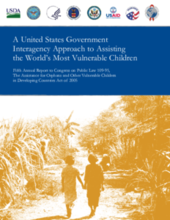
The Fifth Annual Report to Congress on Public Law 109-95, The Assistance for Orphans and Other Vulnerable Children in Developing Countries Act of 2005 highlights continued efforts made by the U.S. Government to improve coordination on behalf of vulnerable children in the past year.
The paper argues that investing in Malawi’s emerging national child protection system will support national social protection goals. The Government is bringing together its various responses to child protection and orphans and vulnerable children as the foundation on which to build the national child protection system, with the intention of delivering a coordinated, harmonised and systematic approach to protecting children from violence, abuse, exploitation and neglect.

SOS Children's Villages has produced an assessment tool for the implementation of the UN Guidelines for the Alternative Care of Children. It has been designed to support the advocacy activities of SOS Children's Villages. The tool’s main focus is to measure a state’s obligations under the UNCRC, in providing quality care arrangements for all children who have lost parental care and those families at risk of separation
This ‘Top Ten Resources’ document lists the currently most relevant materials on Child Protection, as identified by Save the Children’s Child Protection Initiative (CPI).
This qualitative research study seeks to better understand some of the reasons for residential care expansion in the province of Battambang, Cambodia. The study aims to identify why children are sent to orphanages and understand the attitudes of those stakeholders who are influencing the rise in institutions in the province.
The national Adolescent Health Strategic Plan 2011 to 2015 (ADH-SP 2011- 2015) for Zambia, seeks to outline the strategic framework for promoting the planning, organization and delivery of appropriate, accessible, efficient and effective Adolescent Friendly Health Services (ADFHS) throughout the country.
The objectives of this study, which was conducted from January-April 2011 in Sierra Leone, were: to learn about local beliefs and values concerning children, childhood and harms to children; to explore the actions that communities take and the mechanisms that they use for children’s protection; and to understand if and how these actions and mechanisms are linked to the government-led child protection system.
Over the past two decades of humanitarian work in northern Uganda, national and international child-focused organisations as well as government departments responsible for children have built a rich body of knowledge that has informed child protection work throughout the country. The development of this Child Protection Curriculum and related training materials is therefore a first step by the Ministry of Gender, the Ministry of Labour and Social Development, the United Nations Children’s Fund (UNICEF), the Child Protection Working Group in Uganda, and selected academic institutions to professionalise the child protection sector within the broader realm of social work in Uganda.
