Displaying 1611 - 1620 of 1807
A regional strategic framework for coordinating policies to protect, care and support children affected by HIV/AIDS in South Asia.
A set of standards on the process of a child or young person entering care, being cared for, and leaving care, based primarily on the views of children, families, and caregivers.
An advocacy strategy to increase support for orphans and OVC in Uganda.
Examines constraints to expansion of the social welfare net in South Africa. Cites substitution taking place within the social budget since education and health expenditures have already declined in favour of increased welfare transfer expenditures.
Examination of Chile Solidario social protection programme which shows that the focus of policy makers and researchers should be on integration of cash transfers within broader social protection policies.
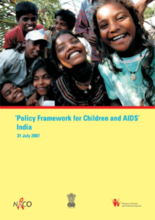
This Policy Framework seeks to broaden the focus to address the needs of the overwhelming majority of children in India affected by HIV/AIDS by covering a broader agenda, spanning both the medical and socioeconomic dimensions of the epidemic as it affects children.
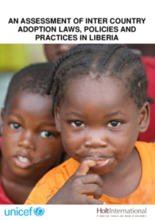
This report presents the findings of an assessment conducted between 8 July and 22 August 2006 that gathered and analyzed information on inter-country adoption to support strengthening Liberia’s adoption laws and develop operating guidelines for adoption agencies.
A regional assessment of responses to children outside parental care in the Caribbean. Extensive research on successful examples of alternative care. Includes recommendations and lessons learned.
Provides analysis of the historical background and current structure of El Salvador's conditional cash transfer programme with attention to family integration
This study identifies key issues that need to be addressed in order to raise the profile of OVC and the Ministry of Gender, Labour and Social Development in Uganda.