Displaying 791 - 800 of 1062
This important assessment of foster care services in the Republic of Moldova explores the differences between the two main types of foster care services provided in that country, including in terms requirements and profiles of caregivers and of the children, the legal and policy framework underpinning them, including the legal status of the foster parent, as well as the allowances and benefits for each type of care
This handbook, Moving Forward: Implementation of the ‘Guidelines for the Alternative Care of Children,’ is aimed at legislators, policy-makers and decision-makers, as well as professionals and care providers, to support the implementation of the Guidelines for the Alternative Care of Children, endorsed by the United Nations General Assembly in 2009. It explains the key thrusts of the Guidelines, outlines the kind of policy responses required, and describes ‘promising’ examples of efforts already made to apply them in diverse communities, countries, regions and cultures.
This is an impact evaluation of New Generation, a three-year project comprised of two components: 1) A VSLA intervention involving the establishment of Village Savings and Loan Associations (VSLAs) and the provision of entrepreneurs
This mapping process was commissioned by the Ministry of Gender, Labour and Social Development in order to facilitate the transitioning of Uganda’s approach to child protection from a disjointed, issue-based and project-oriented approach to a more system-oriented approach in order to respond effectively to the multi-dimensional and complex child protection needs of all children in the country.
Zero to Three, a US based non profit organization working to inform, train and support professionals, policy makers and parents to improve the lives of infants and toddlers, combined the evidence from research on early childhood development with feedback from focus groups with families, friends, and neighbors who act as care givers to develop a range of practical resources to strengthen care practices with children between the ages of 0 and 3.
This Recommendation by the European Commission on Investing in Children, stresses the importance of early intervention and preventative approaches, and makes quality childcare one of its key policy areas to break the cycle of disadvantage in early years and reduce the risk of child poverty and social exclusion.

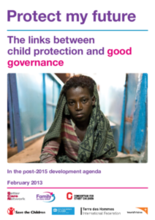
This paper is part of an inter-agency series on the links between child protection and major development goals. The report focuses on the links between child protection and good governance as they relate to the post-2015 Millennium Development Goals development agenda.
This 10-page newsletter, translated into English, is issue number two of a series produced by the “Protecting children of Moldova from family separation, violence, abuse, neglect and exploitation” project, which is implemented by Partnerships for Every Child, the Ministry of Labour, Social Protection and Family of Moldova, and the Ministry of Education of Moldova.
Care related Concluding Observations adopted by the Committee on the Rights of the Child on the initial report of Burkina Faso under the Optional Protocol to the Convention on the Rights of the Child on the sale of children, child prostitution and child pornography.
This manual is the main outcome of the European Commission Daphne III programme, Prevent and Combat Child Abuse: What works? Involving regional exchanges and research from five countries (Germany, Hungary, Portugal, Sweden and the Netherlands), this manual brings together knowledge on what works in tackling child abuse. The manual suggests evidence and practice-based prevention and response strategies against child abuse and neglect, including programs and services that have been shown to be successful in strengthening family care.