Displaying 131 - 140 of 571
This paper deals with the design and development procedures involved in child protection practices in India.
This study evaluates whether the psychometric properties of the Pediatric Symptoms Checklist-17 (PSC-17), a common behavioral health measure typically used as a dichotomous screening tool for mental health needs, support its use as a continuous measure for tracking behavioral health over time.
This study reports on a large quantitative, descriptive study focusing on children in contact with children’s services on a single date in 2015 across the four UK countries (England, Northern Ireland, Scotland and Wales).
The present study report is based on data collected through the National Mapping Exercise in India covering all child care institutions (CCIs)/Homes except 34 CCIs/Homes in Uttar Pradesh. The details of scenario captured by these statistics are expected to provide necessary guidance to all stakeholders regarding improvements required in policy formulation and implementation in future.
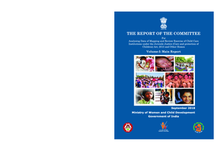
This National Mapping Exercise covering all Child Care Institutions(CCIs)/Homes in the country, except 34 CCIs/Homes in Uttar Pradesh, sheds light on the functioning of CCIs/Homes across the country, in the context of the Juvenile Justice (Care and Protection of Children) Act, 2015. The findings of this report are expected to provide necessary guidance to all stakeholders regarding improvements required in policy formulation and implementation in future.
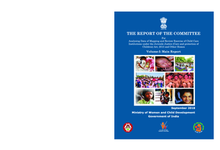
This review of secondary sources refers to information on child protection risks and violence against children in Mali, collected from 2016 to 2018.
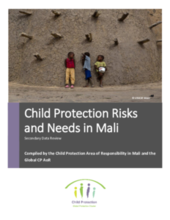
This paper presents the top fifteen priority areas for research investment as identified by a research priority setting exercise conducted by the Assessment, Measurement & Evidence (AME) Working Group of the Alliance for Child Protection in Humanitarian Action (ACPHA).
In the current study, several assessments for attachment disorder symptoms are used within a German sample of foster children after being exposed to neglect and maltreatment in their biological families.
This paper brings to fore the need to compile an accurate and comprehensive database for children living in institutional care in India.
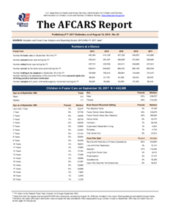
This report from the US Administration on Children, Youth and Families, Children's Bureau presents statistics and figures on foster care in the US for 2017, including the number of children in care disaggregated by age, sex, race/ethnicity, placement type, time in care, and more.