
Displaying 121 - 130 of 352
The aim of this doctoral thesis was to identify why there are higher rates of unauthorised absence from school among post-primary looked after children and young people (LACYP), what does this tell us about their educational experiences, and what is known to be helpful or unhelpful in addressing this issue.
By age 16 the attainment of most children in or on the edge of out of home care has fallen well behind the average for their age. This paper uses the English National Pupil Database to examine how much of this falling behind occurs before the age 7, and how any subsequent decline relates to time in care as against time outside it.
Attachment theory has been adopted in several educational districts (‘local authorities’) in England, and this study reports on an evaluative mixed-methods research study of such training; it also theorises this as a broader question about how schools engage with research.
This paper assesses experiences and challenges faced by the left-behind children (LBC) in Zimbabwe and explores these children’s perceptions of their interactions with teachers through inclusive education practices.
The present study is part of a knowledge translation project in collaboration with local CWS with the aim to develop, implement, and evaluate Enhanced Academic Support (EAS) for primary school children in Child Welfare Services (CWS) in Norway.
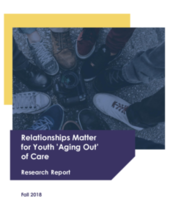
Relationships Matter for Youth 'Aging Out' of Care is a collaborative photovoice project led by Melanie Doucet, who is a former youth in care, alongside eight former youth in care between the ages of 19 and 29 from the Greater Vancouver area.
The All Babies Count (ABC) initiative was a comprehensive health systems strengthening intervention designed to improve neonatal care in rural public facilities. This article describes ABC implementation outcomes, including development of a quality improvement (QI) change package.
This study examines child protection risks faced by preschool age children (3-5 years old) and adolescents (10-14 years old) in Phnom Penh, Cambodia and determines the interconnectivity between such risks and education.
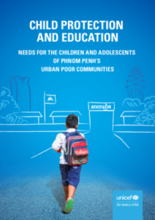
This study examines child protection risks faced by preschool age children (3-5 years old) and adolescents (10-14 years old) in Phnom Penh, Cambodia and determines the interconnectivity between such risks and education.

The aim of the study is to understand the perceptions of court‐involved adolescent girls in residential treatment (40% delinquency, 60% foster care/child abuse and neglect) on school climate and factors that affect their mood in school.