Displaying 111 - 120 of 352
This article reports a three-stage process of developing a model of teacher education to encompass provision for Looked After Children in schools in the UK.
This brief paper focuses on the question of how care-experienced young people in Ireland fare in accessing opportunities in higher education.
In the present report, submitted pursuant to Human Rights Council resolution 37/20, the United Nations High Commissioner for Human Rights provides an overview of the legal framework and practical measures to empower children with disabilities.
Written for USAID and PEPFAR implementing partners, with a focus on OVC practitioners, this is a user-friendly compendium of current resources, information and job aids for early childhood care, stimulation and education.
The purpose of this scoping review is to assess the effectiveness of independent living programs on educational outcomes among youths aging out of the foster care system in United States.
This exploratory, qualitative, multi-case study sought to understand, from the perspective of successful foster alumni college students, the role and influence of family members.
Attachment theory has been adopted in several educational districts (‘local authorities’) in England, and this study reports on an evaluative mixed-methods research study of such training; it also theorises this as a broader question about how schools engage with research.
This paper assesses experiences and challenges faced by the left-behind children (LBC) in Zimbabwe and explores these children’s perceptions of their interactions with teachers through inclusive education practices.
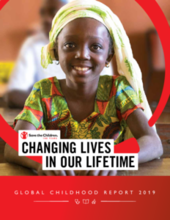
In commemoration of its founding 100 years ago, Save the Children is releasing its third annual Global Childhood Report to celebrate progress for children.
The Early Childhood Agreement for Children in Out-of-Home Care (OOHC) was first developed in 2014 as a shared commitment by the Victorian Department of Education and Training (DET), the Department of Health and Human Services (DHHS), the Municipal Association of Victoria (MAV) and Early Learning Association Australia (ELAA) to support young children in OOHC in Victoria, Australia to access key early childhood services.