Displaying 261 - 270 of 281
This paper identifies programs in sub-Saharan Africa focused on economic strengthening interventions, and analyzes their approaches and impact on orphans and vulnerable children. Interventions focused on savings and lending groups, micro-leasing, market linkages and household gardening appear to be particularly effective.
Evaluation of the Bolsa Escola Program, which was a Brazilian social services program that provided cash transfers to families provided that their school-aged children would be enrolled in and attending school. Examines how beneficiaries were selected, registered, and monitored. Cites inconsistencies in implementation and roles of municipal governments as significant finding.
An executive summary of lessons learned on preventing family separation in poverty stricken communities. Brief case studies from Guatemala, Haiti, Philippines, United States and Burkina Faso.
This paper examines the impact of conditional cash transfers in Latin America. It illustrates successful short-term impact, but recommends continued evaluation to assess the long-term impact.
A brief fact sheet on the multilevel support needs of children without parental care. Includes a brief section on statistical data and examples of UNICEF action in several countries around the world.
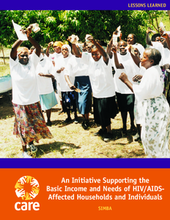
This paper outlines a program (SIMBA) established to work with local AIDS Service Organizations (ASOs) in Zimbabwe to promote economic development in HIV/AIDS affected communities. Efforts to promote capacitiy building of organizations, self-managed and savings-based microfinance services, and basic business management training are described.
A short discussion of various safety net program options and considerations for effective program design. Focus on reducing poverty in sub-Saharan Africa
Outlines key findings of survey conducted to investigate the challenges faced by households caring for OVC in South Africa. Conclusion delineates six potential responses to community needs.
This document is the official policy governing National Orphans and OVC of the Ministry of Gender, Labour and Social Development (MGLSD) of the Republic of Uganda. The policy interprets a vision of a society where all orphans and other vulnerable children live to their full potential, where their rights and aspirations are fulfilled.
Provides a brief overview of child welfare reforms implemented in the ECA Region and the collective effort to move away from over-emphasis on institutional care through the Changing Minds, Policies and Lives Project.