File
Displaying 11 - 20 of 66
By drawing on the experiences of parents, advocates, NGOs, and public officials, this side event will invite discussion on how through strengthening families and tools for prevention, societies can reduce the number of children being institutionalized.
"Child representatives and care leavers from South East Asia have called for increased support for continuing education, psychosocial care, finding jobs and affordable housing in the wake of COVID-19," according to this news article from SOS Children's Villages.
UNICEF is seeking a consultant to design relevant communication materials and training programmes on mental health and psychosocial support (MHPSS) for children, parents, teachers, staff of the National Helpline, social workers and child protection officers in responding to Covid-19 outbreak in Vietnam.
This article reports a part of a qualitative study to address the questions of what and how international organizations have been engaging in the professionalization of social work services for disadvantaged children in Vietnam, taking five international organizations as the unit of analysis.
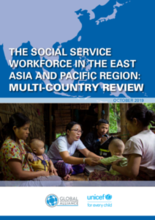
The first multi-country review of the social service workforce in the East Asia and Pacific region was prepared by the Global Social Service Workforce Alliance (GSSWA) and the United Nations Children’s Fund (UNICEF) East Asia and the Pacific Regional Office (EAPRO) with the support and contribution of many people throughout the region. This report is one of several regional reports being produced by GSSWA and UNICEF to increase the availability of information on the social service workforce, and provide a baseline from which to consider ongoing workforce strengthening initiatives.
UNICEF is looking for an international individual consultant to lead a multidisciplinary team, composed of an international team leader and a national team member to undertake a qualitative study on the situation of children affected by internal migration in Viet Nam.
Based on attachment theory, this study was conducted to analyze the contact between these children and their biological parents, and the factors affecting this contact.
This paper highlights findings from a a 15-year longitudinal cohort study of children growing up in poverty in Ethiopia, India, Peru and Vietnam.
This article presents the findings of a study that set out to understand what drives violence in Viet Nam as part of the Multi-Country Study on the Drivers of Violence Affecting Children.