
File

Displaying 341 - 350 of 1206
In this commentary, the authors explain how current circumstances reinforce the need for systemic change within statutory child welfare systems and the benefits that would accrue by implementing a continuum of services that combine universal supports with early intervention strategies.
"A recent review by the Nuffield Family Justice Observatory highlighted a lack of preparation and ongoing support for special guardians, who are often asked to care for children with complex emotional and behavioural problems in challenging circumstances," writes Louise Sims - kinship care and fostering consultant at CoramBAAF - in this article from the Guardian.
The pathway and standards set out what all children in or on the edges of secure care in Scotland should expect across the continuum of intensive supports and services.
This report presents findings from an evaluation of the House Project (HP) in the U.K., which aims to improve outcomes for young people (in accommodation, education, employment and training (EET), wellbeing, autonomy and integration) and service level outcomes for young people leaving care aged 16 and over.
This paper draws upon findings from a study which followed families through the process of pre-birth child protection assessment. It is argued that it is necessary to engage critically with the ‘first three years’ narrative that has become dominant in Scottish policy making and the impact this has had on child protection practice and the lives of families. The paper argues for a broader interpretation of ACEs focused on community and public health across the life course.
This briefing paper aims to highlight some of the key issues and some of the solutions that have been identified through regular meetings of the Scottish Care Leavers Covenant (SCLC) Alliance during the COVID-19 pandemic, drawing together learning from their own work and extensive networks with partners to offer a number of recommendations, and to prioritise steps to improve the lives of care leavers.
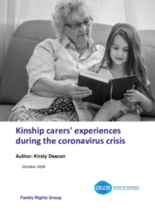
A survey was administered to develop a better understanding of the experiences of kinship care households in the UK as a result of the Coronavirus crisis, and what urgent steps could be taken by Government, local authorities and other agencies to help. This supplementary report provides an in-depth analysis of the kinship carers in Scotland and provides the legal context to influence national and local kinship care policies, practices and services of local authorities and other public agencies.
According to this article from TheJournal.ie, immigration experts have warned that "children in care and modern slavery victims who are EU citizens could 'fall through the cracks' and lose their right to live in the UK after Brexit."
This article from BBC News tells the stories of transracial adoptive families in which parents of color have adopted white children, and the issues they have faced.
Fostering provides a family life for children who are unable to live with their biological parents. The wellbeing of foster carers is important and can have a direct impact on emotional, social and behavioural outcomes for children.