Storify - International Alternative Care Conference - Building the Momentum, 3-5 October 2016
A summary of the International Alternative Care Conference 2016 via Storify.
File
A summary of the International Alternative Care Conference 2016 via Storify.
This article examines adoption and foster care placement policies as they pertain to the competing interests of religious freedom and equal protection for same-sex couples.
The report highlights the constant threat of sexual violence, exploitation, and child marriage that adolescents and girls face in Syria.
This document provides analysis of child protection needs and risks at the government level to support child protection actors in programmed development, resource mobilasation and advocacy.
In this video from VICE, undocumented children face danger attempting to cross the border into the U.S. from Mexico. Those who end up in detention live in squalid, prison-like conditions.
This Evidence Brief provides an overview of the systematic review.
This Executive Summary provides an overview of the systematic review.
This systematic review examines the impact of protection interventions on unaccompanied and separated children, during the period of separation, in humanitarian crises.
This document highlights principles used to guide actions concerning children on the move and affected by migration.
The objective of the study was to estimate the prevalence, comorbidity and socio-demographic correlates of common mental disorders among orphan and vulnerable children (OVCs) in residential care.
This study aimed to assess the prevalence and risk factors of depression, anxiety, stress and low self-esteem among institutional Malaysian adolescents.
This is an explorative study undertaken in central and south part of the Mumbai with the objective of investigating socio-economic, demographic and cultural characteristics of street adolescents in Mumbai.
The aim of this article is to study the situation on realizing children’s rights in Poland and in Russia in the context of Janusz Korczak’s principles.
This study seeks to understand collaboration dynamics in social services for determining what strategies work best in facilitating collaborative endeavors in specific policy and institutional environments.
This study underscores the fact that visible minority families receiving child protective services are a far from homogeneous group and that there are a number of effective methods that can be used with them.
This document contains an overview of a 10-year study conducted in Australia on trends in child protection outcomes across jurisdictions.

This study captures the lived experiences of twenty-four young Indian girls who have left care in the past four years. It addresses their journey of moving out of care at two levels — their preparation to leave care and their present experience.
Using the accumulated wisdom of a select group of accomplished managers, academics and policy makers in social work and social care, this paper retrospectively reviews the evolution of Family Support within the Irish context and distils the core characteristics of Family Support practice and service delivery.
This paper draws on a British Academy (BA) funded study exploring social workers’ conceptions of family using a vignette and focus groups.

This paper reports findings from an ethnographic study in which the researcher notes and gathers personal accounts relating to material and non-material exchanges between professionals and parents.

This paper reviews the case of Daniel Pelka, a child in Scotland who was murdered at the hands of his mother and her partner.

Street children in Nigeria face risks of being recruited by terrorist organizations. This program held by American University of Nigeria hopes to reduce children’s risks of recruitment.
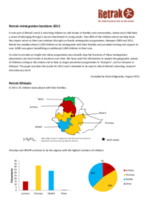
Each year Retrak maps the locations of family reintegration placements and tracks trends in locations over time. They have used this information to help them understand the geographic spread of children coming to the streets and to target prevention programmes on ‘’hotspots’’- places from which many children migrate to the streets.
This report looks at the adaptation of Retrak’s Family Reintegration Standard Operating Procedures in the context of children in temporary youth detention institutions, known as remand homes, in Uganda.
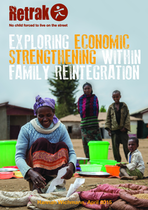
This small research project was conceived to investigate the issues surrounding economic strengthening with Retrak Ethiopia’s reintegration programmes with the aim of seeking new ways to address the challenges.