Eastern and Southern Africa Regional Learning Platform: July 2022 Update
This is the monthly update of the Eastern and Southern Africa Regional Learning Platform published in July 2022.
File

This is the monthly update of the Eastern and Southern Africa Regional Learning Platform published in July 2022.
This paper highlights the importance of placing support for children with disabilities and their families at the centre of care reform efforts, and provides examples from across the region of how this can be done.
This short paper examines why children on the move need to be included in care reform in the region, how the care needs of these boys and girls can be met, and what lessons can be learned from the care of children on the move to inform the care of children more broadly.
This paper examines the nature and benefits of foster care and identifies some of the key challenges associated with this form of care in Eastern and Southern Africa. It outlines the elements of an enabling environment needed for successful large-scale foster care programmes, including legislation, guidance, changes to social norms, coordination mechanisms, and a strong social service workforce. The paper also provides lessons learnt from the region on how to support each stage of the foster care process.
The Returning to Original Vision case story demonstrates reunification of children with disabilities as a critical step in transition. It also highlights the challenges of maintaining organizational vision within a process of transforming services.

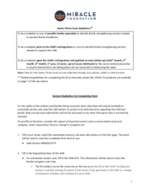
The purpose of the Home Thrive Scale™ is to assess the possibility of a child staying with or returning to their family and to identify services needed to make reintegration possible.
Designed for trainers imparting life skills education to children ages 5-18.
This toolkit is designed for the social service workforce in need of basic counseling skills. It includes mini lessons that teach fundamental counseling skills and activities and worksheets to provide opportunity to practice the skills.
This toolkit is designed for parents/caregivers and the social service workforce guiding them. It provides practical tips that can be implemented quickly and mini lessons on topics of importance to anyone raising or supporting a child.
The toolkit provides the user with a comprehensive assessment framework for analyzing current systems, procedures, and practices against international standards and professional case management practices at both the case level and system level. This toolkit does not promote a specific model of case management since no one approach or model can be applied to every situation. Rather, it outlines the beneficial aspects, processes, and strategies of case management that have shown improved outcomes for children and families.