This section includes resources, news and other key documents related to children's care in the context of the current humanitarian crisis affecting Ukraine and surrounding countries. This section is updated daily.
News
Featured Resources
Related Tools and Guidance
Country Care Snapshot
Events
Other Resources
Displaying 1 - 10 of 225
This policy brief demonstrates how UNICEF's Better Start and Better Care frameworks complement one another to strengthen child wellbeing through integrated early childhood development and child protection systems in Ukraine. It explains that Better Start focuses on universal and targeted services for children from pregnancy to age six, while Better Care provides progressive support for children at risk of family separation or living in alternative care.
This brief presents the findings of a review of state and regional training programmes for social sector professionals in Ukraine.
This brief presents findings from a workforce capacity study involving an online survey of 2,448 social sector professionals and focus group discussions conducted across Dnipro, Kharkiv, Lviv, and Volyn oblasts in Ukraine.
This research report reviews international approaches to competency frameworks and in-service training for the social service workforce, drawing on experiences from the United Kingdom, Romania, Germany, France, Sweden, Poland, and other countries.
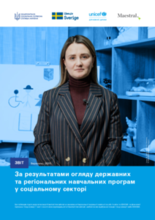
This analytical report presents a comprehensive review of national and regional training programmes for Ukraine's social sector workforce to assess their relevance, quality, and alignment with current legislation, international standards, and workforce development needs.
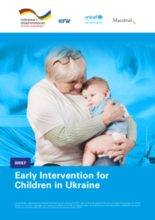
This brief presents the rationale, service model, and estimated costs for scaling up Early Childhood Intervention (ECI) services in Ukraine under the National Strategy to Ensure Every Child's Right to Grow Up in a Family Environment. It explains how multidisciplinary, family-centred services support children under four years of age with developmental delays, disabilities, or risks of developmental impairment by strengthening parental capacity and promoting children's inclusion in family and community life.
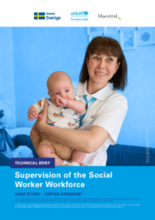
This case study examines the supervision system for the social work workforce in the United Kingdom, highlighting governance arrangements, professional standards, implementation practices, and lessons relevant to strengthening supervision in Ukraine. The publication describes supervision as a legally mandated and reflective practice embedded within employer accountability systems and professional development, rather than solely a performance management mechanism.
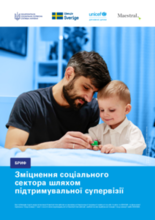
This brief summarizes the findings of a national assessment of supportive supervision for Ukraine's social sector workforce and presents key policy recommendations for strengthening supervision systems. Based on a desk review, an online survey of 2,448 social sector professionals, and interviews with key informants, the assessment identifies significant gaps in the current supervision system, including limited access to supervision, inconsistent understanding of supervisory practice, the absence of recognized professional standards and certification for supervisors, and fragmented legal regulation.
This brief presents the rationale, service model, and estimated costs for expanding positive parenting services in Ukraine as part of the National Strategy to Ensure Every Child's Right to Grow Up in a Family Environment. It describes a comprehensive parenting support model aimed at strengthening the knowledge, skills, and resilience of parents and caregivers through community workshops, parenting classes, self-help groups, one-to-one counselling, and community outreach.
This brief summarizes findings from a workforce capacity assessment examining the knowledge, skills, and competencies of Ukraine's social sector workforce in support of the Strategy on Ensuring Every Child's Right to Grow Up in a Family Environment (2024–2028).