Displaying 31 - 40 of 1120
This report summarizes a regional consultation convened by UNICEF and Pan American Health Organization to strengthen efforts to prevent and address violence against children in Latin America and the Caribbean. It highlights existing evidence, policy frameworks, and good practices from participating countries to support more coordinated and effective responses to violence against children.

The anniversary event marking one year since the 2024 Global Ministerial Conference brought together global leaders, ministers, experts, and advocates to celebrate progress toward ending violence against children and to renew commitments for the y
This Lancet commentary highlights a major update to the evidence base for preventing violence against children, emphasizing findings from a new systematic review that strengthens and refines the INSPIRE Framework’s intervention strategies. It underscores that several approaches—such as parenting programs, whole-school violence prevention, healthy relationships education, and cash-plus life-skills initiatives—are proven effective, while others lack sufficient evidence and require reevaluation.
A decade after the launch of WHO’s INSPIRE Framework, this systematic review updates the global evidence on what works to end violence against children. Analyzing 216 systematic reviews, it identifies the most effective interventions—including parenting programs, safe school environments, healthy relationship education, cash-plus life-skills training, and cognitive behavioural therapy—and underscores the urgent need to scale up these proven approaches worldwide.
The Children’s Commissioner’s report “The Criminalisation of Children in Care” reveals a deeply concerning pattern: children in care in the UK are disproportionately drawn into the criminal justice system, often for low-level incidents that, in a family setting, would be handled without police involvement. To address this, the Commissioner calls for a strengthened, statutory protocol among police, local authorities, and youth services; better diversion pathways; a more child-friendly prosecution process; increased legal aid and training; more stable, high-quality care placements; and improved data sharing to monitor and prevent harmful police involvement.
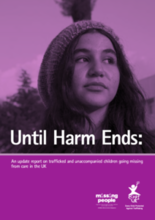
This report reveals significant issues with child victims of trafficking and unaccompanied children going missing from care. Trafficked children continue to be one of the groups who are most at risk of going missing in the UK with nearly 2 in 5 going missing in 2024.
This article analyzes the gap between Pakistan’s progressive child protection laws and the harsh realities faced by the country’s 1.5 million destitute and neglected children, highlighting how weak implementation, custodial care models, and social stigma undermine their rights and well-being. It argues that meaningful rehabilitation requires shifting from welfare-based responses to empowerment-focused, holistic support systems that integrate legal protection, trauma-informed care, and market-relevant education.
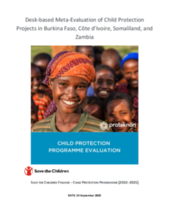
The report is a meta-evaluation of Save the Children Finland’s Global Child Protection programme, implemented from 2022 to 2025 in four countries in Africa – Burkina Faso, Côte d´Ivoire, Somaliland and Zambia – spanning development, humanitarian and peace-building contexts.
Corporal punishment is the most commonly experienced form of violence against children. Evidence shows it harms children’s health and offers no benefits for children, parents, or societies.
This short film was produced by the Global Youth-Led Movement on Ending Violence Against Children for the launch of the World Health Organization’s first-ever report on the public health impact of corporal punishment of children (August 2025).