Displaying 751 - 760 of 858
This article discusses how prevalence rates of child maltreatment (CM) can differ substantially between countries and ethnicities
This handbook, produced by the Directorate General of Human Rights and Rule of Law, is a practical tool for legal professionals from Council of Europe member states who wish to strengthen their skills in applying the European Convention on Human Rights and the case law of the European Court of Human Rights in their daily work.
This fact sheet highlights Austria’s process in transforming institutional care towards community-based and family-based systems.
This guidance from the National Child Traumatic Stress Network provides information and suggestions for helping children who experience traumatic separation from a caregiver.
This paper examines the notion of “unaccompanied and separated children” of Russia.
According to this Country Fact Sheet focusing Greece, there is no database holding data on children in alternative care in Greece.
This report reviews the maritime movements of asylum-seeking children across South East Asia and their experiences in countries of origin, transit and destination.
This report tells the story of “forgotten children,” children who are relegated to the margins of society due to discrimination and subjected to the hardships of poverty. The report is aimed at identifying what is required to meet the needs of these children and to ensure their basic rights to survive and thrive, to learn, and to be protected.
This article discusses the concept of "Unaccompanied and Separated Children" and how this concept is applied in Russian law.
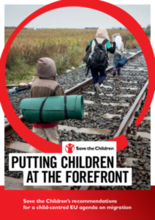
Based on experience from work on the ground, this report from Save the Children identifies a number of key issues that urgently need to be addressed by the EU and its Member States to ensure better management of mixed migration flows for children and their families, including separated and unaccompanied children.