Displaying 471 - 480 of 507
Developed by the UNICEF Regional Office for Central and Eastern Europe/Commonwealth of Independent States as a discussion paper for the 2nd Child Protection Forum on Building and Reforming Child Care Systems
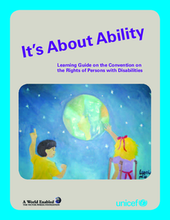
Companion resource to It’s About Ability, designed to empower children and young people to speak out on the convention and become advocates for inclusion.
A directory of resources promoting and guiding the participation of disabled children and young people in program development.
Current public opinion about the residential care system in contemporary Russia is extremely negative. A majority of Russians, both citizens and professionals, consider that family placement is the best arrangement for orphaned children.
This briefing looks at the effectiveness of interventions that encourage safe, stable and nurturing relationships for preventing child maltreatment and aggressive behaviour in childhood. The focus is on primary prevention programmes, those that are implemented early enough to avoid the development of violent behaviour such as child maltreatment and childhood aggression.
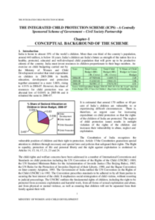
In 2006 the Indian Ministry of Women and Child Development proposed the adoption of an Integrated Child Protection Scheme (ICPS), which was adopted and launched by the central government in 2009-2010. Recognizing chronic under funding of child protection services in the country and major gaps in the system, the ICPS was expected to significantly contribute to the realization of Government/State responsibility by creating a system that would effectively and efficiently protect children.
This module does not attempt to address all areas that affect children with disabilities in depth but aims to support the development of skills and knowledge in relation to emergency aspects, and to provide information and links for facilitators and trainers who require more detailed resources and guidance.
This report brings together an eight-part series of briefings on the evidence for interventions to prevent interpersonal and self-directed violence. By spotlighting evidence for the effectiveness of interventions, the series provides clear directions for how violence prevention funders, policy makers and programme implementers can boost the impact of their violence prevention efforts.
The purpose of this study was to gain a better understanding of the challenges and needs of children with intellectual disabilities, their families, and service providers.
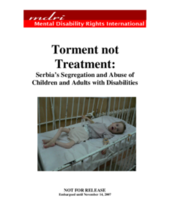
This report is the product of an investigation spanning four years by Mental Disability Rights International (MDRI) into the human rights abuses perpetrated against institutionalized children and adults in Serbia. From July 2003 to August 2007, MDRI documented a broad array of human rights violations against people with disabilities, segregated from society and forced to live out their lives in institutions.